BLOG
Athens, San Francisco, New York: Greece is Earning Its Place in AI
By Endeavor Greece
Oct 08, 2026
We're building the links that matter, at the moment they matter most.
Over the course of September, in Athens, San Francisco and New York, Greek diaspora founders, policymakers, investors and cultural leaders came together. What emerged was how a country of ten million can earn a seat at AI's table, by hosting the global debate, building research teams at home, putting its data and infrastructure to work, and making sure AI protects its language and culture.
In Athens, Greece hosted UNESCO's Goodwill Ambassadors for a discussion on AI and culture. In San Francisco, Greek diaspora founders building AI at companies such as Runway, Arena, Tunic Pay and Resolve AI sat down with Silicon Valley's researchers and investors, joined by Greek Prime Minister Kyriakos Mitsotakis on the first visit to San Francisco by a sitting Greek Prime Minister in at least two decades. The delegation also visited NVIDIA and Tesla, and Greece's Minister of Digital Governance met with four Greek-origin founders in their own offices. In New York, the month came full circle, returning to a discussion on AI and culture at Columbia University’s World Leaders Forum.
Endeavor Greece, which organized much of it with partners and co-organizers in each city, set out to learn from the frontier, put policy and builders in one room, connect leading Greek diaspora founders with investors and with Greece, and show those rooms what Greece now offers.
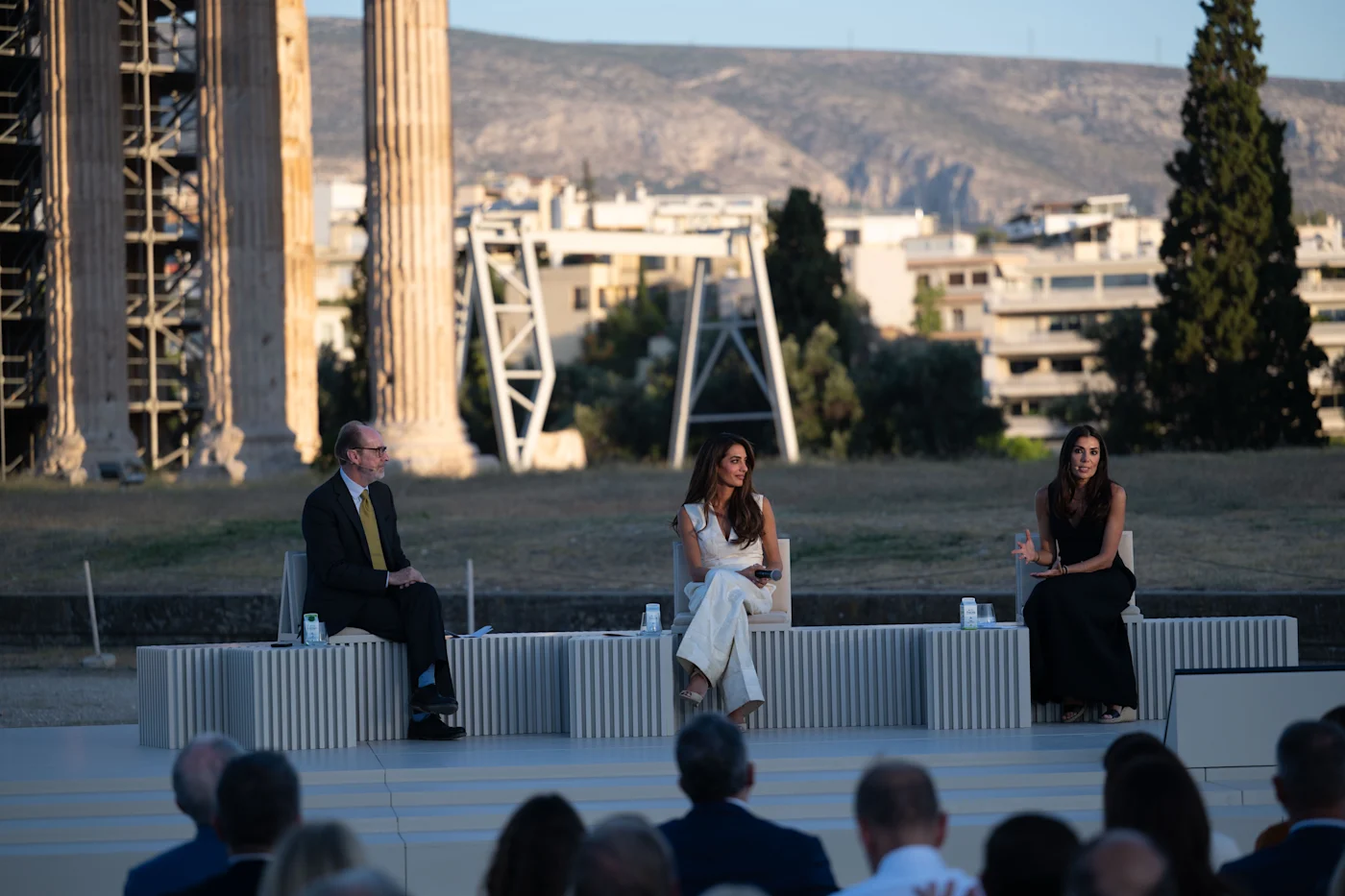
AI and Culture, Temple of Olympian Zeus, Athens
For the first time, UNESCO's Goodwill Ambassadors met outside Paris, and they chose Athens for a discussion on artificial intelligence and culture. UNESCO Director-General Khaled El-Enany opened by framing the discussion around a defining question: how will humanity evolve alongside a technology this transformative?
On a panel moderated by The Economist's Alasdair Ross, Costantza Sbokou Constantakopoulou, UNESCO Goodwill Ambassador for the Protection and Promotion of Culture and Endeavor Greece Chairwoman, argued that even though AI is able to give voice to traditions that were previously invisible, it still learns from dominant narratives. "What the system doesn't see, AI cannot protect." Amal Clooney called culture an antidote to a world divided into echo chambers, because it reminds people of what they share. She also pointed to tools her foundation built with Microsoft's AI for Good Lab that put legal information in the hands of vulnerable communities.
The discussion wrapped up on a point Greece would carry to New York two weeks later. Culture cannot be reproduced, only protected, and AI can help more of the world see it.

Breakfast at Sequoia Capital, Menlo Park
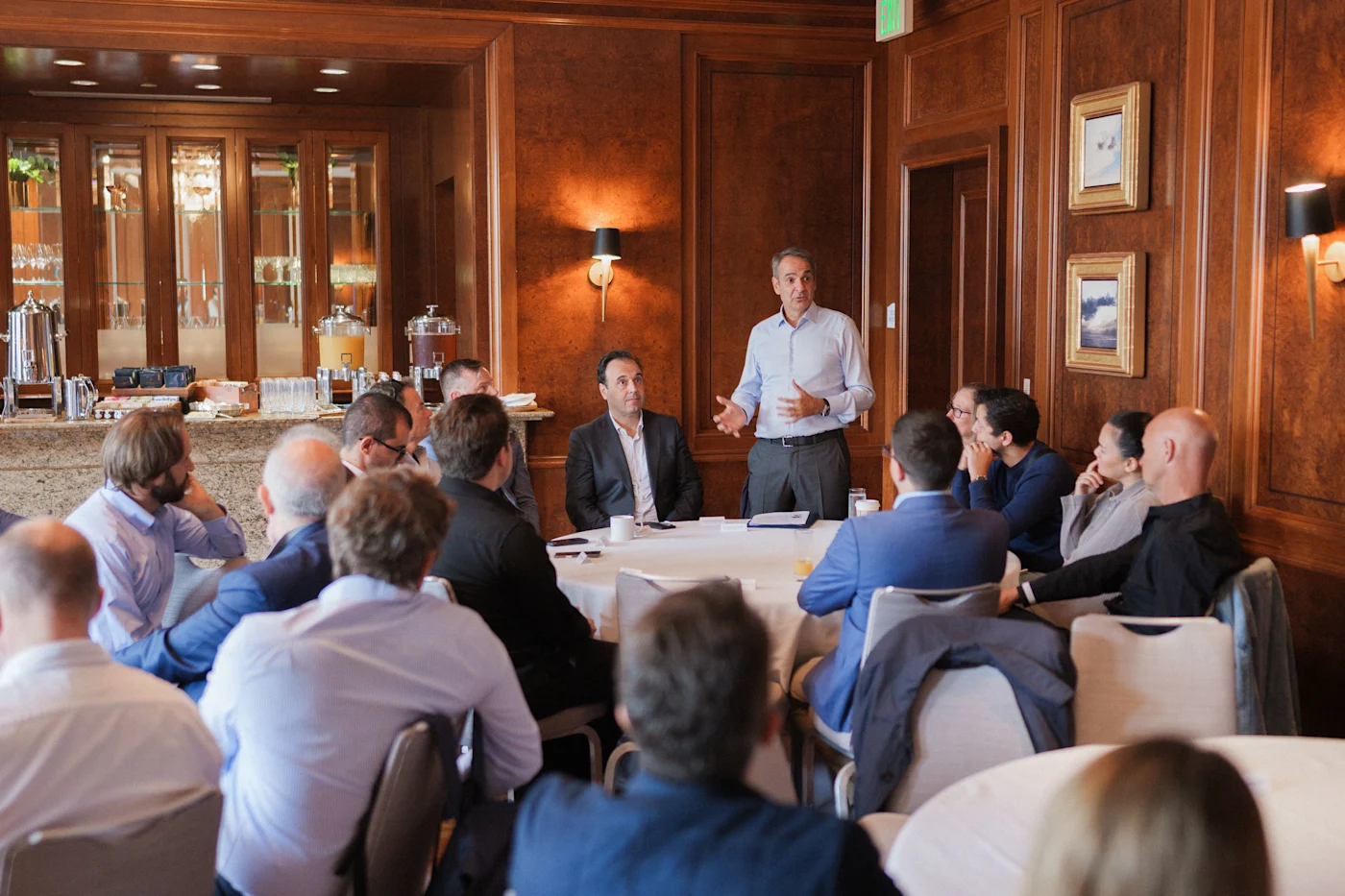
In Silicon Valley, Sequoia Capital's Konstantine Buhler and Doug Leone hosted the Greek delegation alongside three researchers who have built some of the field's defining systems. They were Chris Ré of Stanford University, Bill Peebles, who created Sora at OpenAI, and Igor Babuschkin, who co-founded xAI and now runs River AI. The Greek diaspora founders behind Arena, Runway, Tunic Pay and Ent, along with the Greek Prime Minister, sat at the same table.
Doug traced Silicon Valley to a few ingredients. It starts with a great university, then a culture that takes risks, and regulation light enough to let small companies keep their speed. Large companies then open research centers, and the engineers they bring in go on to build companies of their own. That, he said, is how a country keeps its young people, and a country that doesn't will lose them. The Prime Minister said Greece is on its way, with several large tech companies already opening research centers there, drawn by its talent and lower costs, but added that it still needs to move faster.
Greece does not need to compete on building the base models to matter, the room concluded. Its openings are hosting the global debate on how AI should be governed and testing physical AI in sectors where it already leads, such as maritime shipping and small-scale agriculture.
NVIDIA, Santa Clara
By late morning the delegation was at NVIDIA, whose systems the AI industry runs on, to make Greece's case on infrastructure and data. John Josephakis, who leads NVIDIA's global high-performance computing and AI business, hosted the delegation for a three-hour session with the company's leadership, including Executive Vice President Jay Puri.
NVIDIA set out three tracks for working with Greece, through its government, its leading companies and its startups, with a route for startups from its Inception program to its venture arm, NVentures. The Prime Minister made the case for building data centers in Greece, which faces less local resistance to them than the United States and already connects Europe and the US through subsea cables.
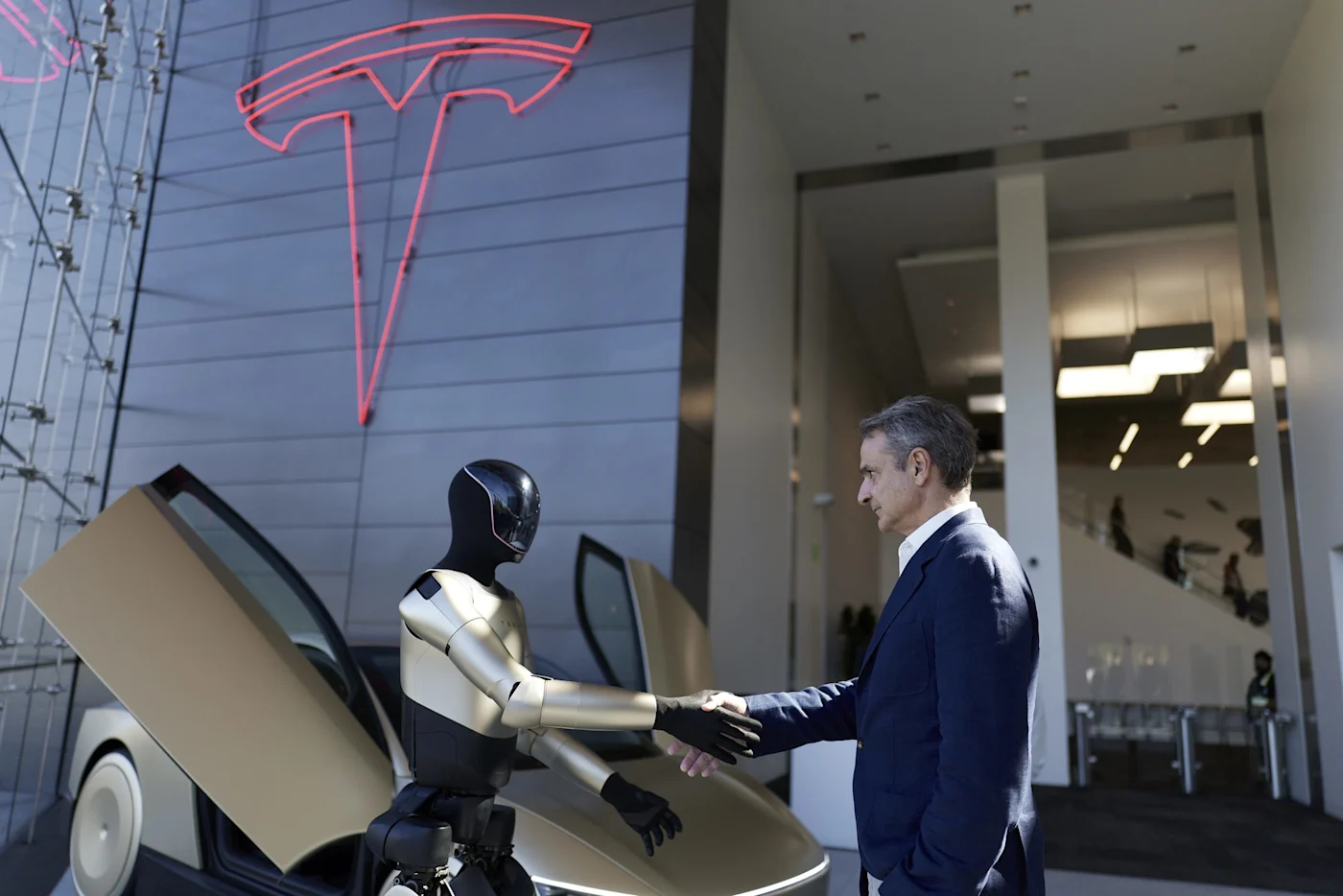
Tesla, Palo Alto
From NVIDIA, the delegation went on to Tesla's Palo Alto headquarters, hosted by Konstantinos Laskaris, a National Technical University of Athens graduate who leads its Optimus robotics program.
That evening the Prime Minister pointed to Tesla as proof that frontier work can be done from Greece. Tesla runs a team in Greece doing advanced research on the magnetic properties of materials, and it has recruited Greeks from abroad to staff it. Opportunities like these, he suggested, are how Greece has reversed much of its brain drain.
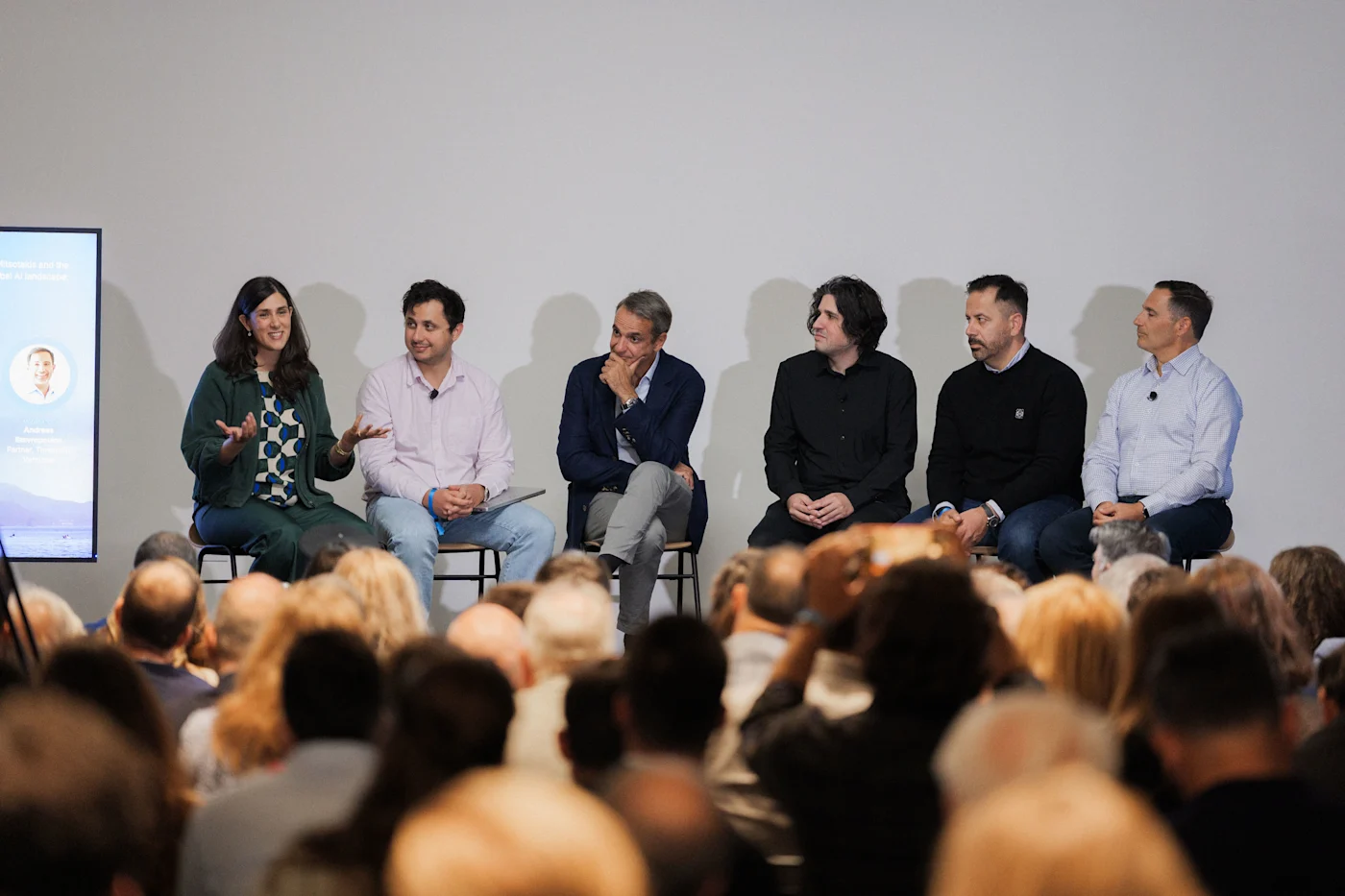
The Future of AI Elsewhere, Shack15, San Francisco
The evening, co-organized with The Hellenic Initiative in partnership with Shack15 and the Consulate General of Greece in San Francisco, put policy and the people building AI on the same stage. In conversation with TechCrunch's Connie Loizos and then alongside four Greek diaspora founders, the Prime Minister named the risk he sees most clearly: a widening gap between what these systems can do and what policymakers understand. This gap, he said, was a key reason behind his visit to San Francisco: to listen and learn from the people building the technology.
The founders he shared a stage with were ready with a first direction: Anastasios Angelopoulos, co-founder and CEO of Arena, argued that regulation should be based on harm actually measured in practice, not theory. For Nicky Goulimis, co-founder and CEO of Tunic Pay, timing was crucial. Scammers, she warned, are adopting AI faster than the banks defending against them.
Timing was just as crucial for the Prime Minister's visit, which came against the backdrop of the global debate on how to control and regulate AI. Though he said he did not have a clear answer to the questions AI raises, he offered Greece as a forum for that global conversation, a place where technologists sit down with philosophers and historians.
The founders were focused on how to bring more than just the conversation to Greece. Anastasis Germanidis, co-founder and co-CEO of Runway, said Greeks abroad take the chance to work from Greece every single time it is offered, and that fast-moving companies need graduates who have already trained models at university, which makes research infrastructure in Greece part of the equation.
Spiros Xanthos, founder and CEO of Resolve AI, is choosing where to open his company's first European office, and said Greece has a real chance to set itself apart. What would help most, he said, is simplicity. A single EU incorporation would let a company set up in Greece and sell to the entire European market, and if it is made easy, he said, people will come.
Endeavor Dinner at Kokkari, San Francisco
Four stops and more than twelve hours after we sat down for breakfast at Sequoia Capital, the day ended the Greek way, around a table. The Endeavor Dinner at Kokkari gave Greek diaspora founders building AI in San Francisco a private evening with the Prime Minister.
Breakfast with General Catalyst, San Francisco
The next morning, General Catalyst hosted the Prime Minister for breakfast with leading US founders and investors. Greek-origin founders sat at the same table: Anastasios of Arena, Nicky of Tunic Pay and Elias Manousos, founder of Ent.
The conversation centered on Greece's emergence as a significant tech and innovation hub, driven by excellent talent, improved business infrastructure, and strong government support for entrepreneurship.
Greece is home to around 1,000 startups valued at around $12 billion, said Panagiotis Karampinis, Managing Director of Endeavor Greece, and a growing number of Greek-origin founders in the US are building companies that singlehandedly surpass that figure, such as Reflection AI, which is valued at $25 billion.
Challenges remain. The Prime Minister pointed to the need for more vocational training and mentorship, and Panagiotis said young Greeks need to see bigger success stories, such as IPOs and listings, to believe it is possible to build one.
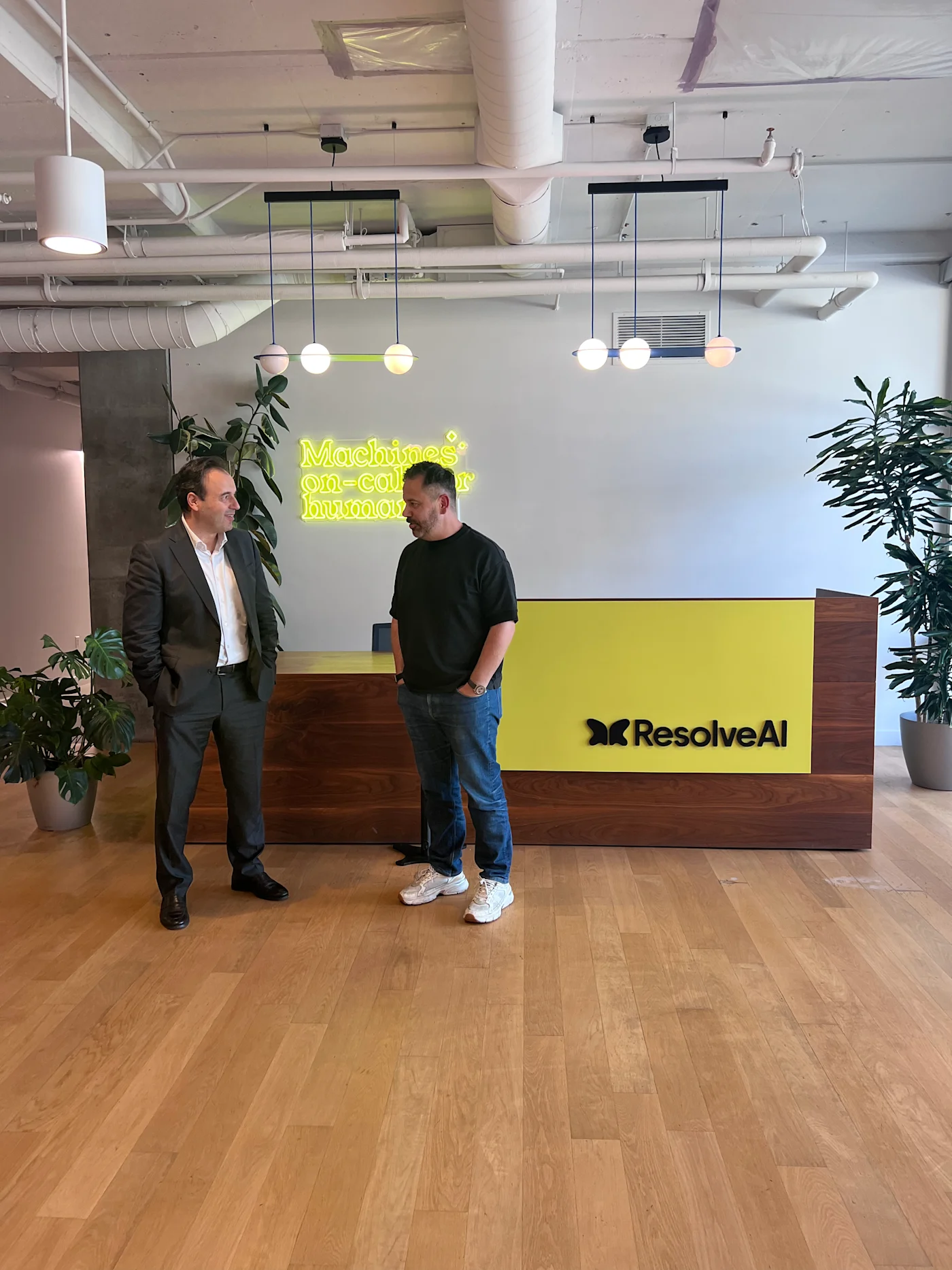
The Minister of Digital Governance at Resolve AI, Arena, Runway and Ent, San Francisco
That afternoon the Greek state went to the founders. Dimitris Papastergiou, Greece’s Minister of Digital Governance, spent time with four companies founded by diaspora Greeks in their own San Francisco offices. Runway, Arena and Resolve AI carry publicly reported valuations totaling about $8.5 billion, and Ent emerged from stealth in June with $100 million raised.
Each company works on a question the Greek state now faces as it brings AI into public services. Arena, whose meeting rooms are named after Greek gods and philosophers, is the platform where OpenAI, Google and Meta test their models. Resolve AI puts AI agents on call to keep critical systems running. Ent builds security for workplaces where people and AI agents act side by side. Elias argued that a country which does not own the chips or the models can still govern the security layer in front of them.
At Runway, whose models generate video and power real-time interactive agents, the focus centered on education, an area where the Prime Minister and Minister Papastergiou have both said Greece most needs answers. Those agents could act as tutors grounded in the curriculum, or examine pupils orally at a scale schools cannot manage today.
Endeavor Dinner at Consulate General of Greece, New York
On the eve of AI + Culture, Endeavor Greece Chairwoman Costantza Sbokou Constantakopoulou and Board Member Dean Dakolias welcomed 35 guests to an intimate dinner at the Greek Consulate in New York on 23 September, under the generous hospitality of Consul General Iphigenia Kanara. Over dinner at the Greek Consulate, guests, hosts, and the Consul General shared an off-the-record conversation on AI, culture, and Greece's place in both, setting the tone for the next day's AI + Culture event.
AI + Culture, Columbia University, New York
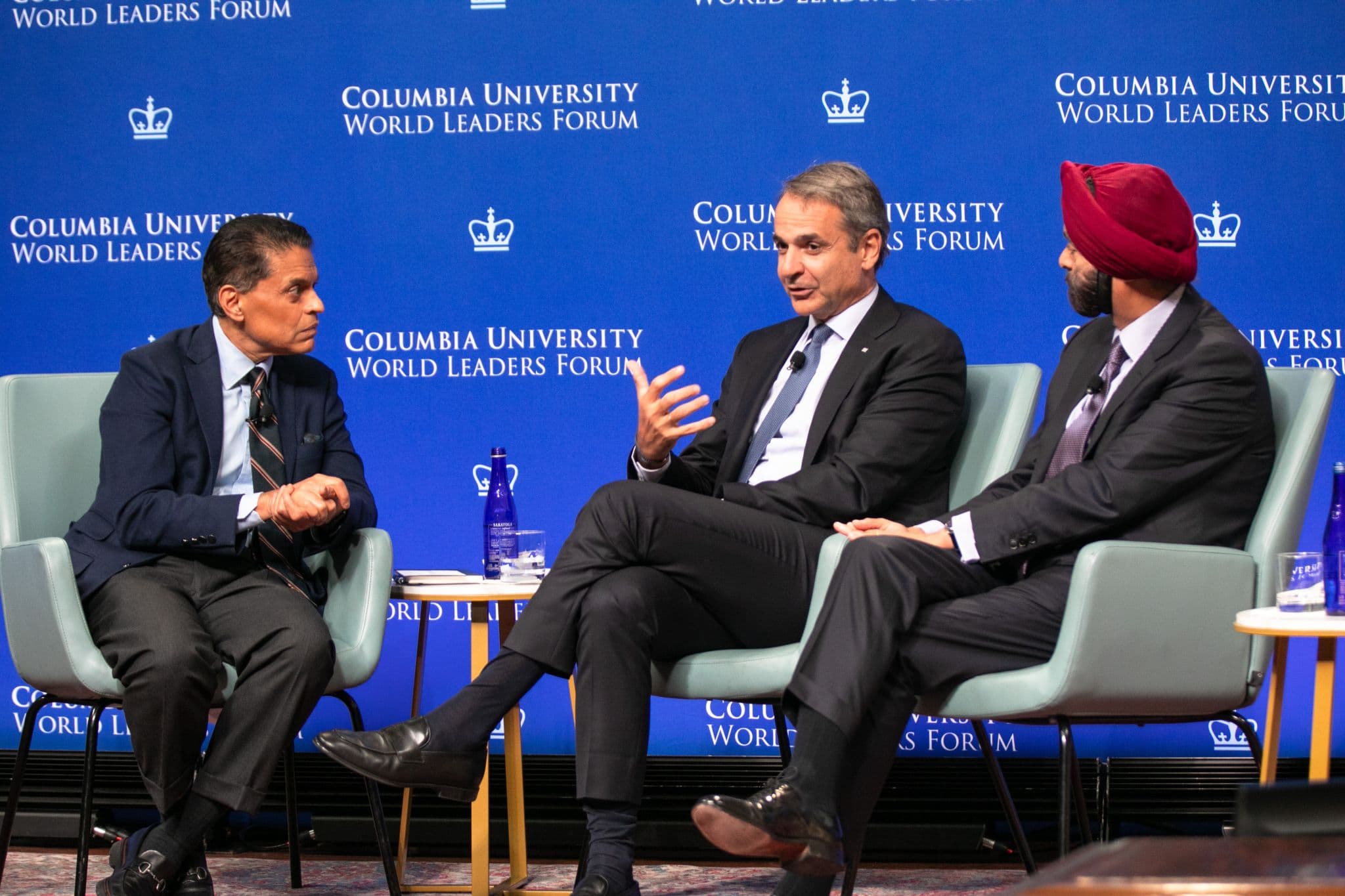
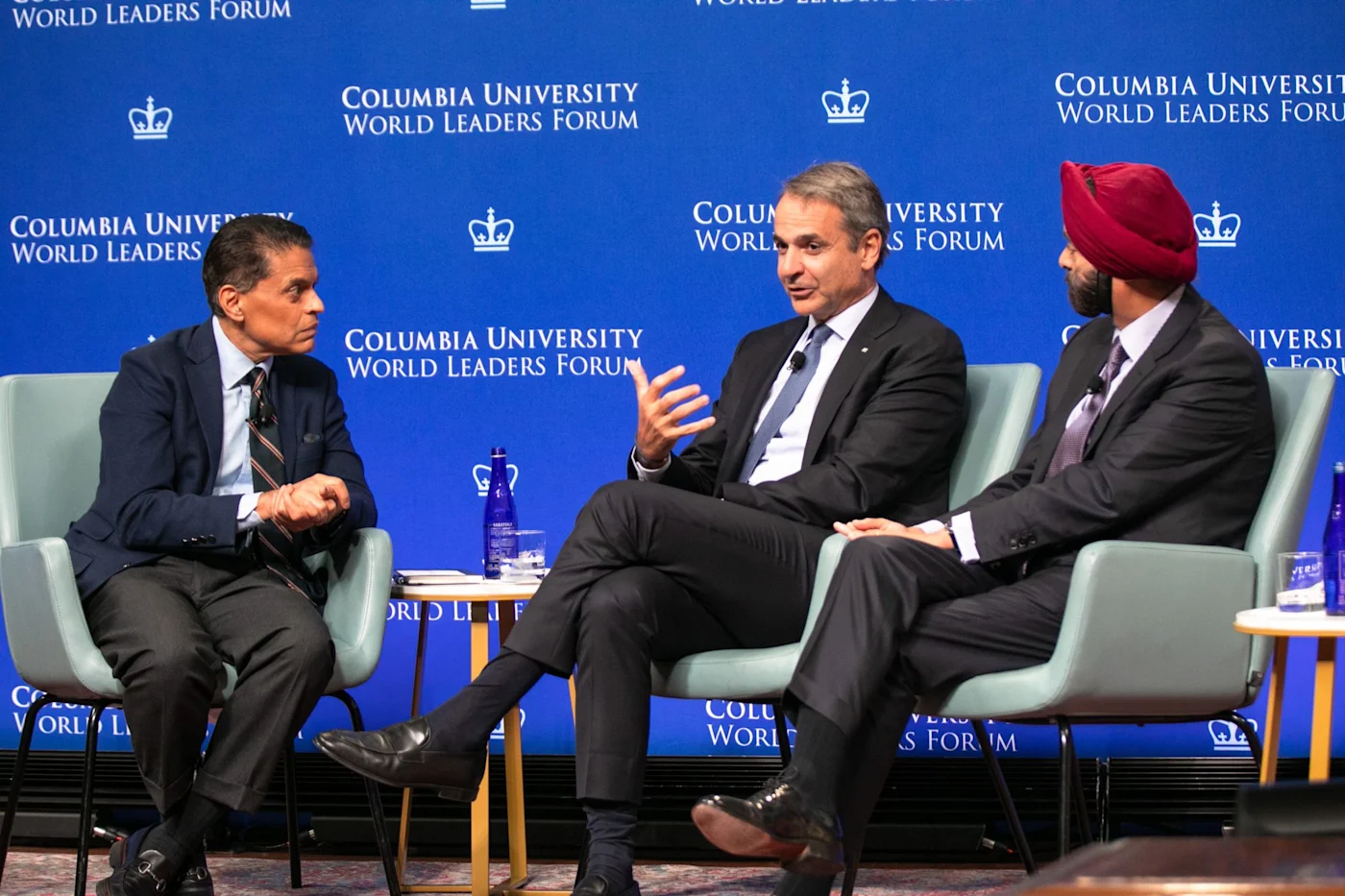
The month ended on the question it began with. At Columbia University's World Leaders Forum, hosted by Columbia Engineering with Endeavor Greece and Columbia's School of the Arts under the patronage of UNESCO, AI and culture were back in the spotlight, this time in front of world leaders in New York for the UN General Assembly.
Opening the afternoon, Costantza contrasted the Acropolis, built in a few years and still standing nearly 25 centuries later, with AI that can change how a culture remembers itself within months. Greece is already turning that technology toward preservation, she said, through an agreement with ElevenLabs to record local dialects at risk of disappearing.
Columbia President Jennifer Mnookin framed it as a tale of two AIs, one of unparalleled opportunity and one of unprecedented risk, and the afternoon saw both play out. World Bank Group President Ajay Banga described an illiterate woman farmer in India who can point her phone at a diseased leaf and learn the cure and where to buy it. The Prime Minister described the Greek state using AI to cut a two-hour contract review to ten minutes, but also acknowledged that no government is ready for what AI will do to jobs.
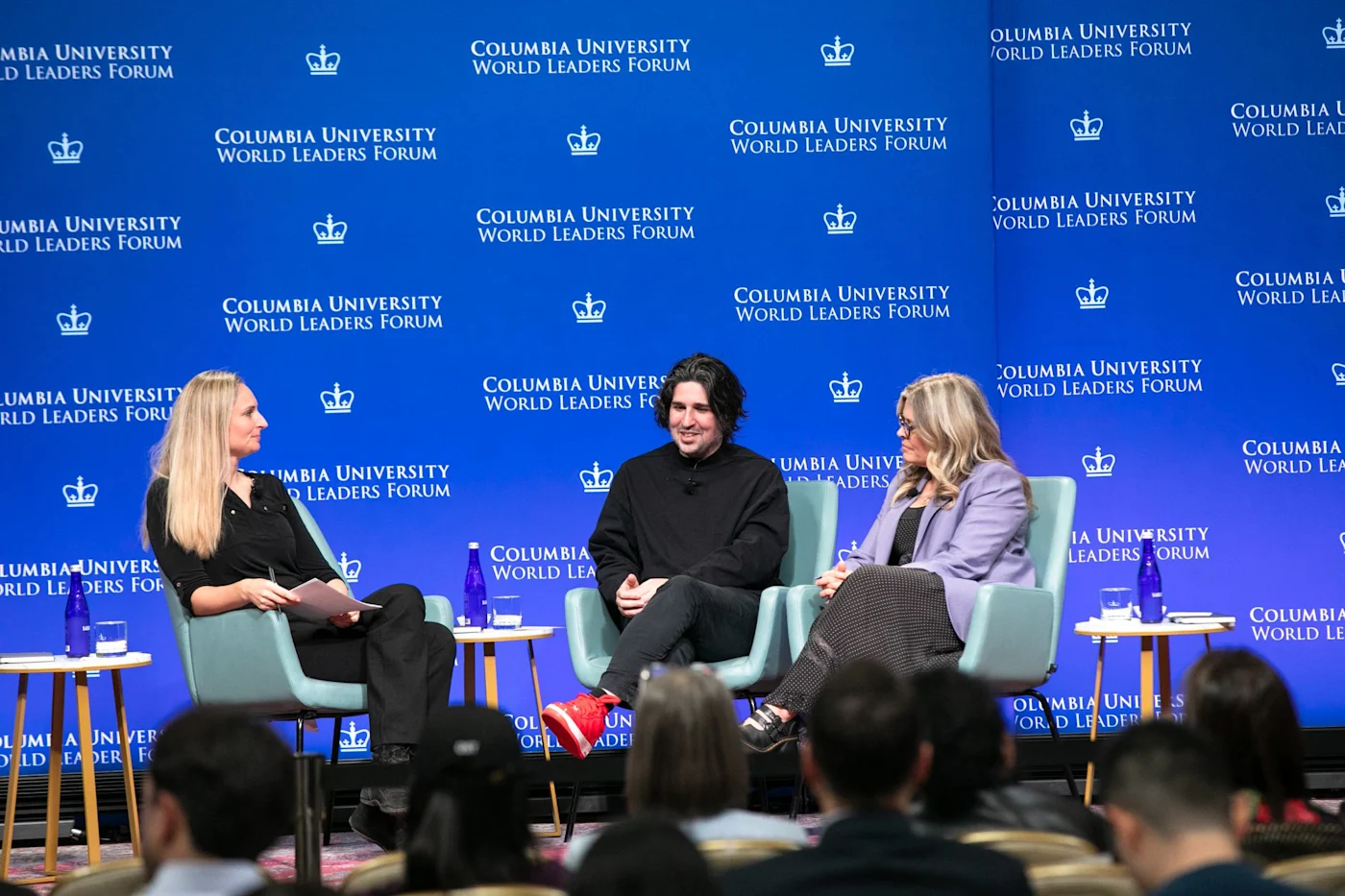
Oscar-winning filmmaker and former chief creative officer of Walt Disney Animation Studios Jennifer Lee told the story of a scene in Frozen 2, where Elsa reaches for her mother's memory, animated by an artist who had just lost her own mother. The shot, she said, would not be what it is without her. At the same time, Anastasis, Runway's co-founder, argued that AI can enable stories to be told that otherwise would not.
Most of these rooms generated more questions than answers, but what the month built were the links to keep asking the questions together. The links between Greece and the US, founders and governments, Greeks abroad and Greeks at home. That is how a seat at the table is earned.