EVENT
A Room Full of Possibility: What StrictlyVC Athens Revealed About the Next Chapter of Greek Tech
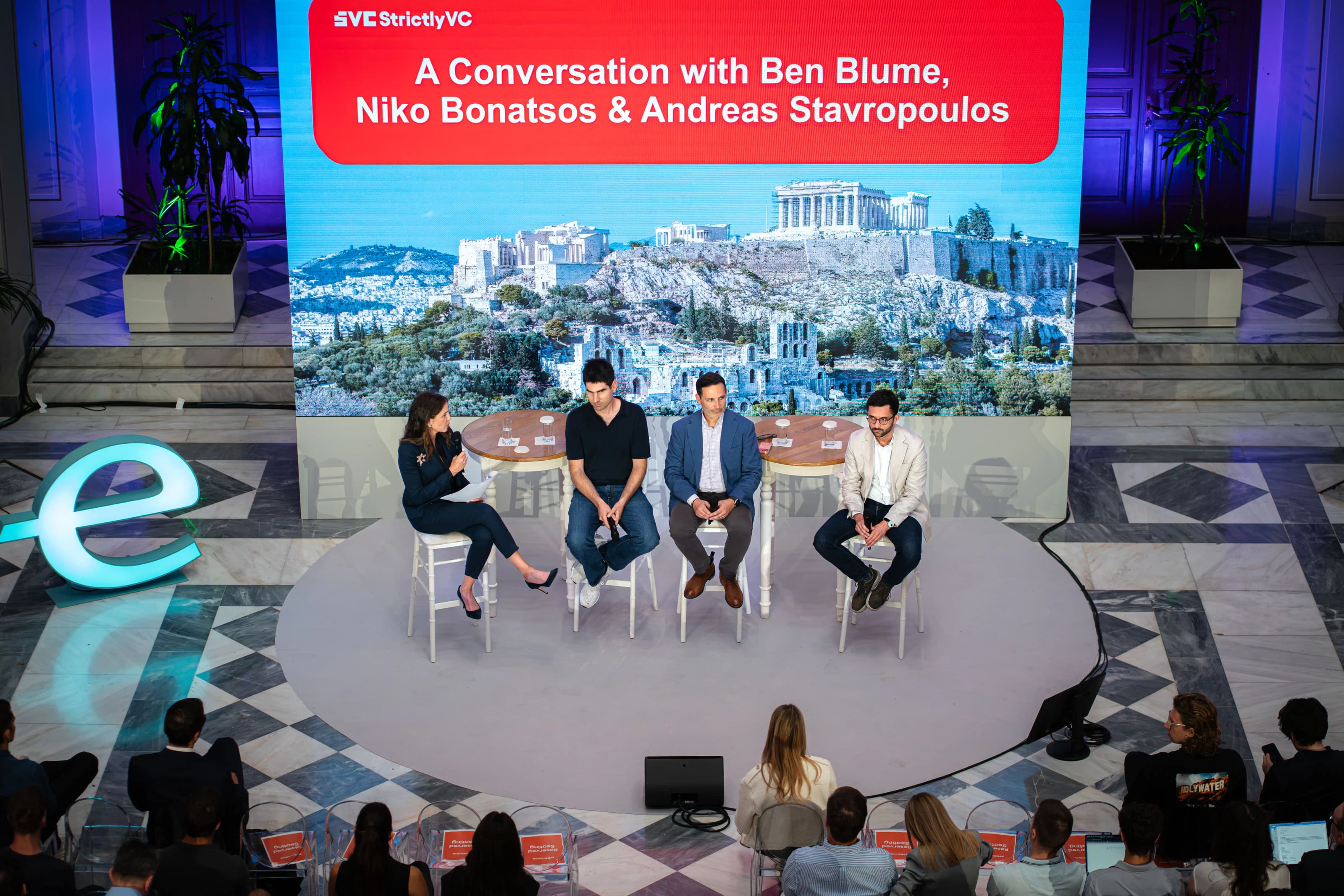
A Room Full of Possibility: What StrictlyVC Athens Revealed About the Next Chapter of Greek Tech
There is a particular kind of energy that fills a room when people feel they are standing at the beginning of something.
It is not loud. It does not always appear in the most polished answers or the biggest statements. Sometimes, it is found in the way founders lean forward when someone speaks about risk. In the way investors describe what they look for before the rest of the market has caught up. In the way a young entrepreneur in the audience suddenly realizes that the distance between where they are and where they want to go may not be as wide as it once seemed.
That was the feeling at StrictlyVC Athens 2026.
For the second year running, TechCrunch, Endeavor Greece, and National Bank of Greece brought StrictlyVC to Athens, as part of Panathēnea 2026. The afternoon gathered people whose careers collectively span much of the modern technology story: from the evolution of Silicon Valley’s venture ecosystem to the AI companies now reshaping the boundaries of creativity, entertainment, finance, infrastructure, and company building itself.
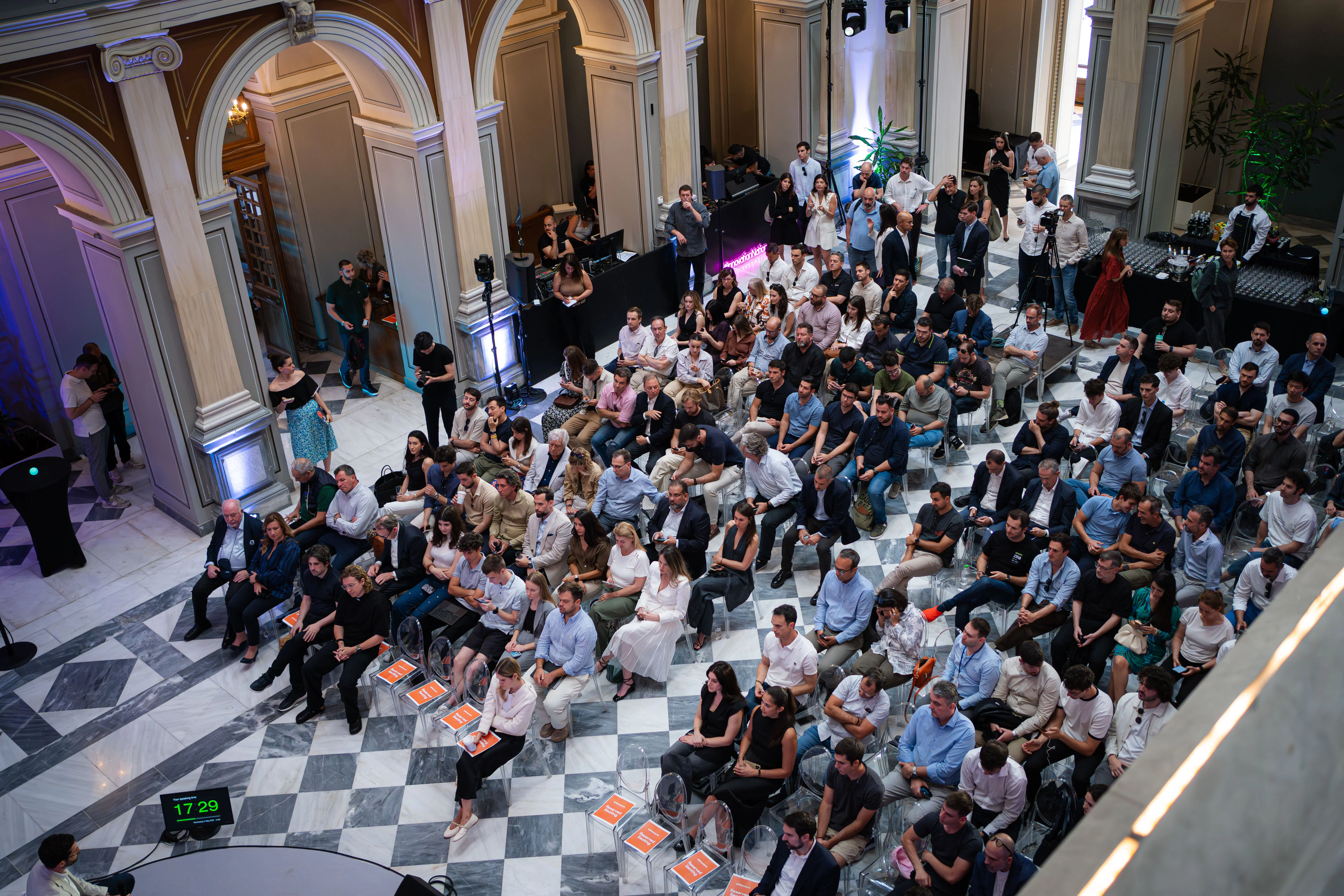
Connie Loizos, Editor-in-Chief and General Manager of TechCrunch and founder of StrictlyVC, led the conversations with the kind of clarity that makes complex markets feel easier to understand without ever simplifying them. On stage with her were Ben Blume of Atomico, Niko Bonatsos of Verdict Capital, and Andreas Stavropoulos of Threshold Ventures, investors who have spent years looking at the same question from different angles: what makes a founder, a company, or a market worth believing in before it becomes obvious to everyone else?
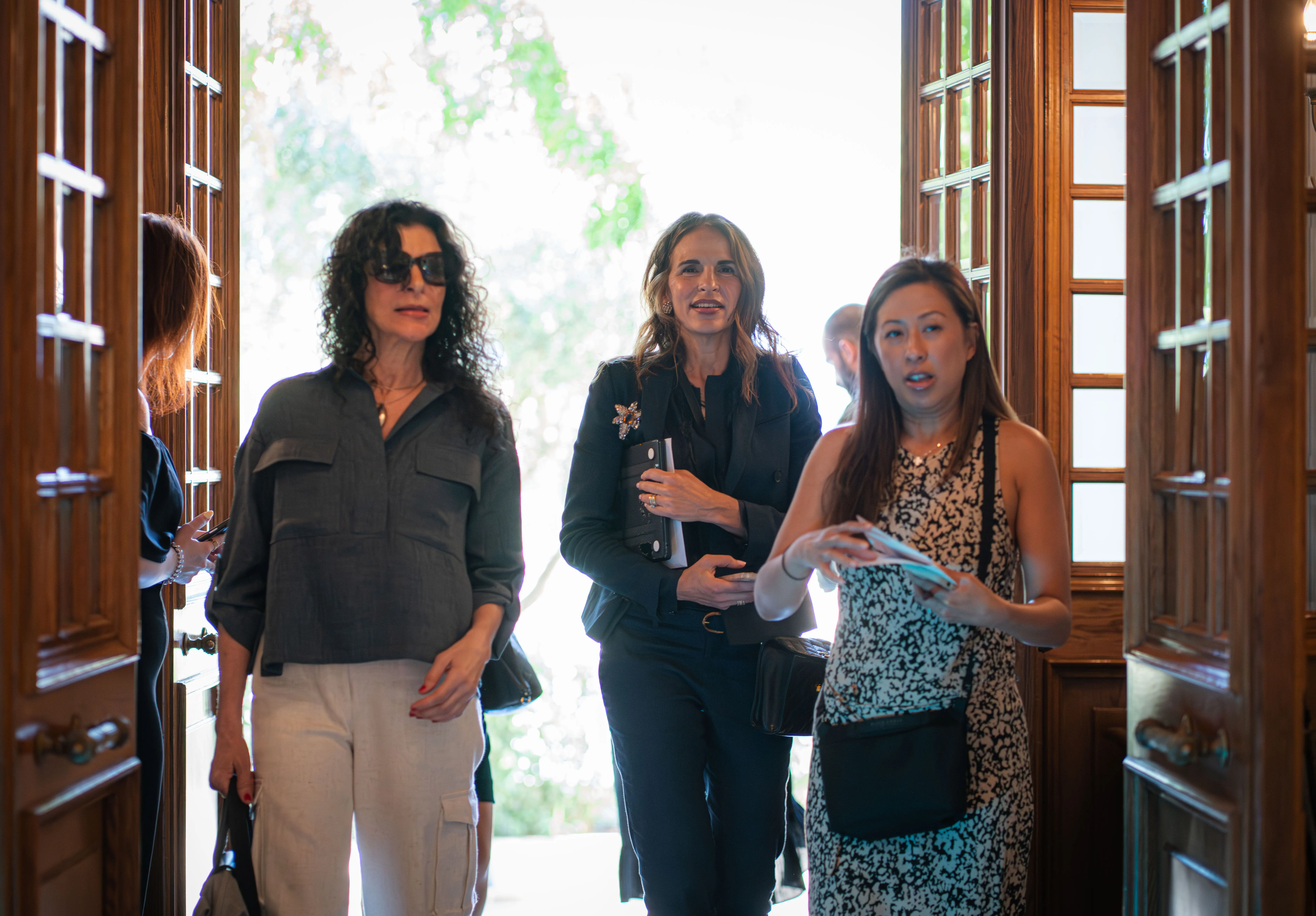
The founder conversations brought a different kind of proximity to the afternoon. Victoria Toli of FINNY and Johannes Galatsanos of Diffraqtion spoke about the realities of building beyond the first version of an idea: customer validation, product discipline, and the difficult but necessary process of letting go of what no longer serves the company. Later, Anastasis Germanidis of Runway and Anatolii Kasianov of HOLYWATER TECH brought the room closer to the frontier of AI, creativity, and entertainment, where products evolve quickly, teams move with unusual speed, and the line between technology and imagination becomes increasingly thin.
Completing the lineup was Iliana Magra of Kathimerini, whose editorial perspective helped bring the conversation back to the broader questions surrounding innovation, technology, and the role of emerging ecosystems.
What made StrictlyVC Athens stand out was not only the caliber of the people on stage. It was the quality of the questions underneath the conversations.
What does it mean to build in a market that changes every few months? What does an investor look for when metrics are still unclear and categories do not yet have names? What makes a company durable when the technology it depends on may look completely different a year later? And what happens when a smaller ecosystem stops asking whether it belongs in the global conversation and starts asking how many more global companies it can produce?
A different kind of market moment
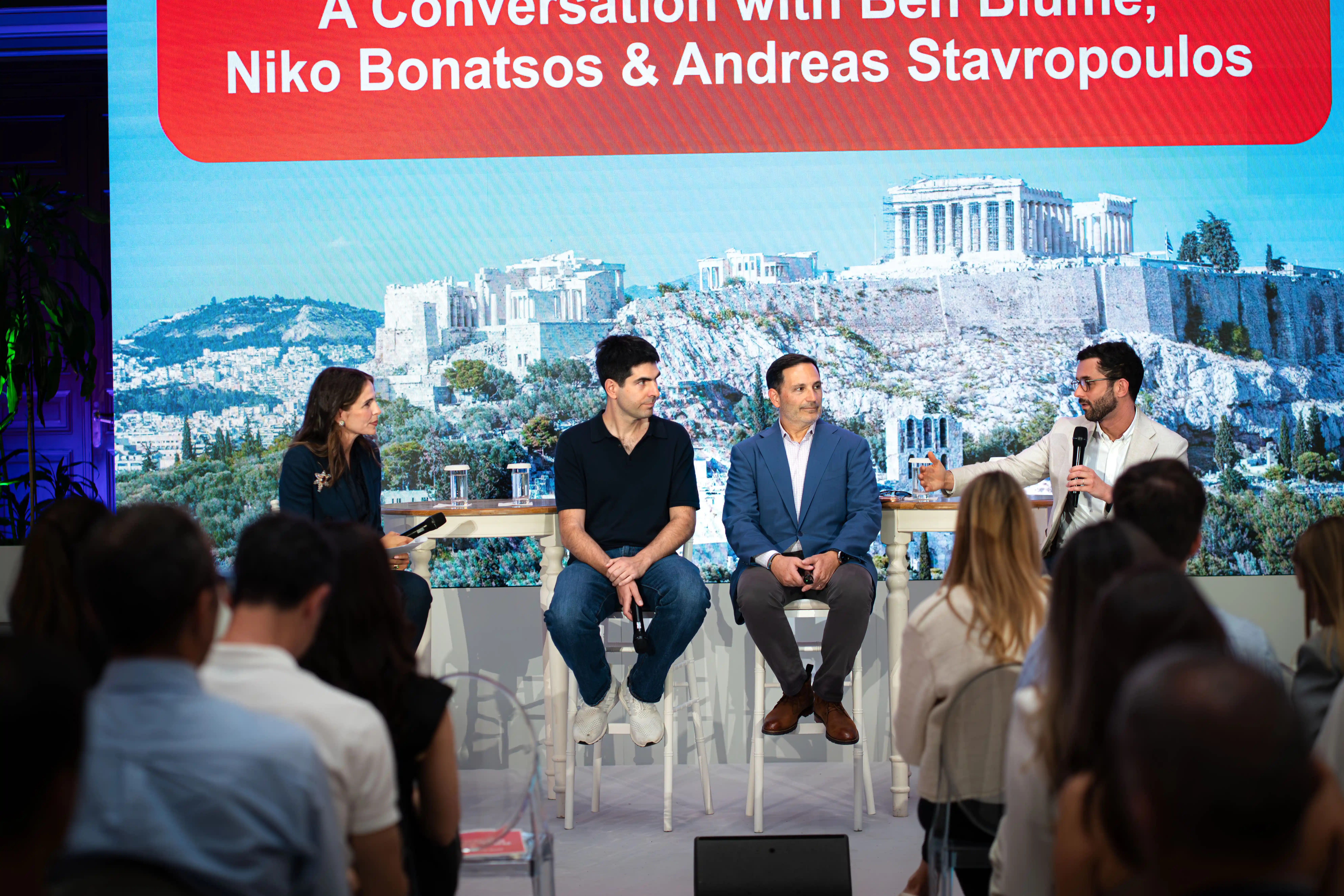
The afternoon opened with a discussion that captured the tension currently shaping venture capital.
On one side, there is enormous optimism. Major technology companies are approaching potential IPO moments that could reopen markets, create liquidity, and recycle capital back into the next generation of founders. Artificial intelligence has accelerated the pace at which companies can be created, tested, and scaled. Founders can now build with fewer people, less time, and tools that would have seemed impossible only a few years ago.
On the other side, there is a harder reality. Capital is concentrating around fewer companies and fewer firms. Valuations are moving quickly. The market is full of enthusiasm, but also noise. In some categories, the speed of change makes it harder to know what is truly durable and what is simply early excitement.
That tension ran through the conversation between Connie Loizos, Ben Blume, Niko Bonatsos, and Andreas Stavropoulos.
Ben Blume noted that great companies can be built anywhere, a point that feels especially important in a room like this one. Geography still shapes access, networks, and opportunity, but it no longer defines the limits of ambition. What matters is the quality of the founder, the size of the problem, and the ability to build for a market much larger than the one immediately around you.
Niko Bonatsos framed the search for exceptional founders through a memorable analogy: the next “Giannis Antetokounmpo of startups.” The point was not about sports. It was about rare, world-class talent that can emerge from a smaller market and go on to compete at the highest global level. Talent that may not look obvious at first. Talent that requires someone to recognize it early, support it properly, and understand that greatness is not always born in the places where everyone is already looking.
Andreas Stavropoulos brought the conversation even closer to the Greek context. For founders building from smaller ecosystems, thinking globally cannot be a later-stage strategy. It has to be the assumption from day one. A smaller home market can sharpen focus, but it cannot become the ceiling.
What connected their perspectives was not a belief that the market will move in a straight line. It will not. Corrections will come, as they always do in periods of technological transformation. Some companies will be overfunded. Some categories will disappear. Some early excitement will prove fragile.
But the larger shift is real. AI is changing not only what companies build, but how quickly they can build it. In that environment, investors are not simply looking for polished companies. They are looking for founders with intensity, adaptability, and the ability to move faster than the market around them.
From interesting ideas to urgent problems
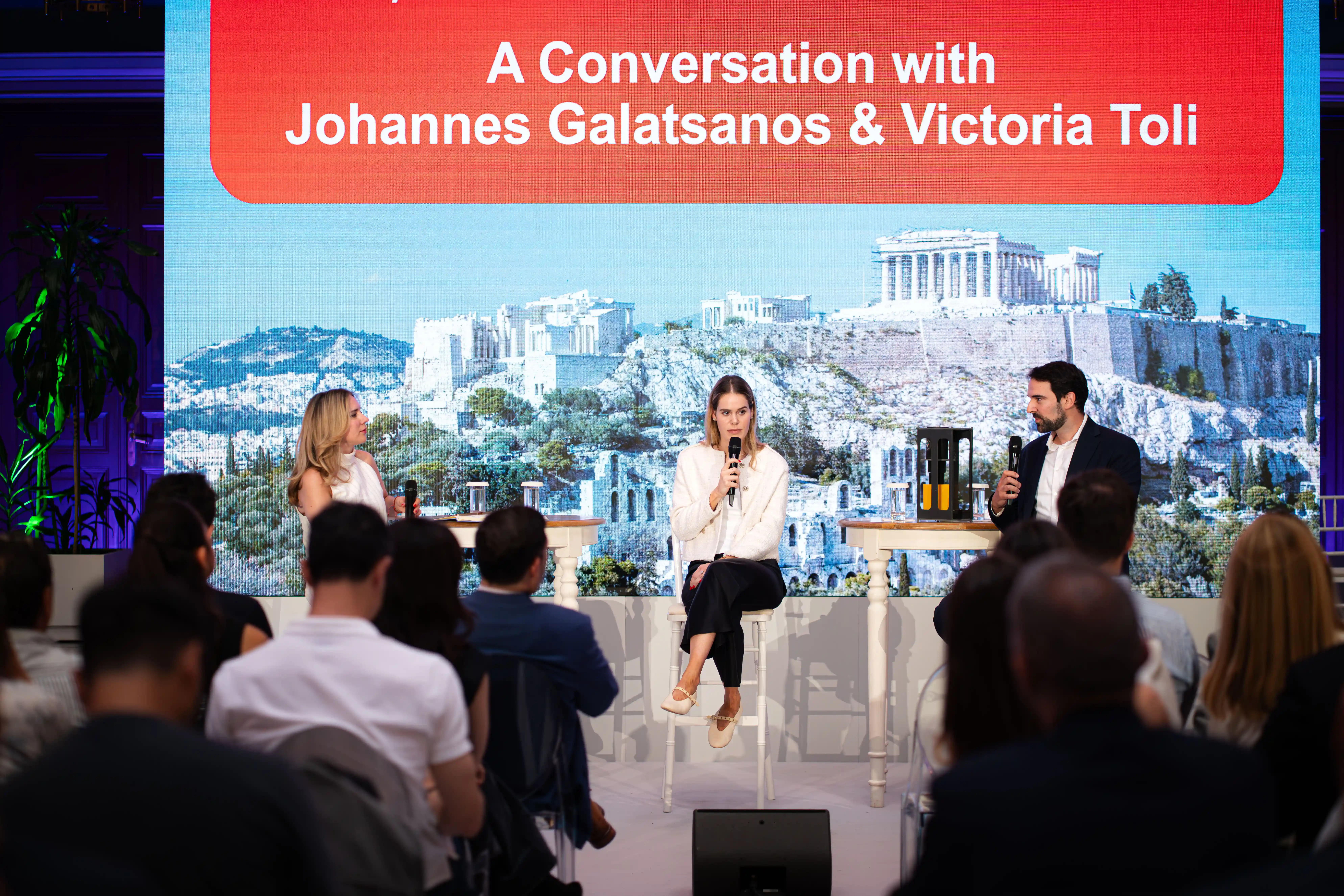
If the first conversation focused on capital, the second brought the room back to the discipline of company building.
Moderated by Iliana Magra from Kathimerini, the discussion with Victoria Toli of FINNY and Johannes Galatsanos of Diffraqtion moved away from the language of market cycles and into the much less glamorous question every founder eventually has to answer: does anyone need this badly enough?
One of the strongest ideas from the panel was that great companies are rarely built around ideas that are simply interesting. They are built around urgent problems customers are already trying to solve on their own.
The kind of problem where people are piecing together spreadsheets, emails, workflows, and tools that were never designed for the job. The kind of problem where demand becomes visible before the product is perfect. The kind of “hair on fire” problem where an imperfect solution is still better than no solution at all.
For FINNY, this means staying close to the customer and understanding where existing systems are failing to meet a changing market. In fast-moving technology environments, the product a customer sees today may not be the same product they use a month later. What matters is whether the team can keep learning, adapting, and staying ahead of what customers will need next.
For Diffraqtion, the lesson came through the lens of deep tech. Some technologies are powerful, but not every use case is the right commercial path. The process requires experimentation, discipline, and the willingness to abandon ideas that may be intellectually exciting but commercially weak. In that sense, “killing your darlings” is not a lack of conviction. It is often the thing that allows a company to survive.
That part of the afternoon felt especially important because it brought ambition back down to earth.
Building globally does not only mean thinking big. It means listening carefully. Testing honestly. Moving quickly. And having the humility to change direction when the market tells you something different from what you hoped to hear.
Building at the frontier of AI
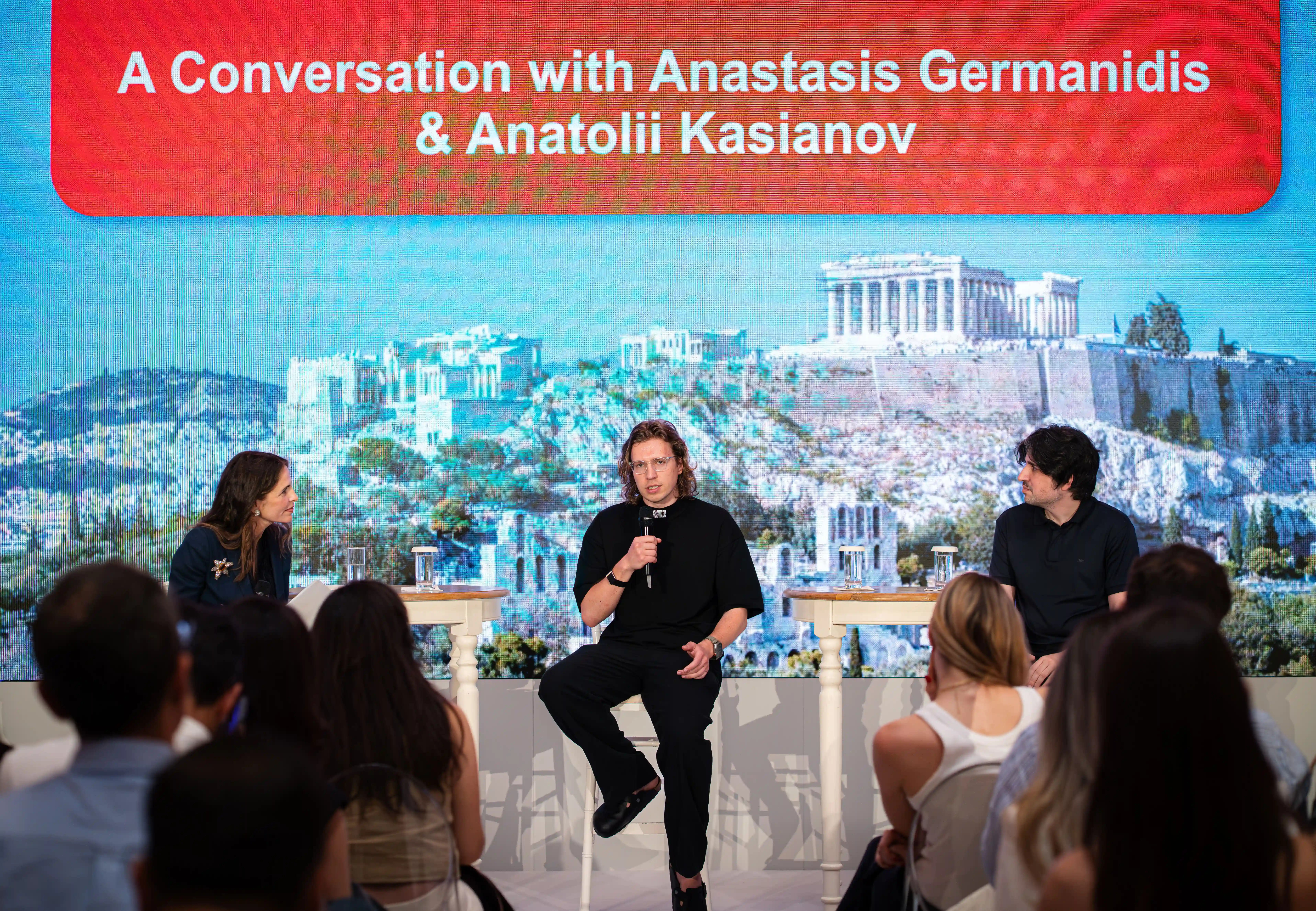
The final conversation, between Connie Loizos, Anastasis Germanidis of Runway and Anatolii Kasianov of HOLYWATER TECH, brought the room to the frontier of AI, creativity, and entertainment.
Runway is building tools and models that are helping redefine how films, images, video, and creative content are produced. What began as a belief in the creative potential of generative models has expanded into a broader vision for world models, simulation, and the future relationship between AI and visual creation.
HOLYWATER TECH approaches the same technological shift from a different angle: as an AI-first entertainment company building and distributing content for global audiences. Its evolution reflects a culture of experimentation, rapid iteration, and the willingness to pivot as technology and audience behavior change.
The two companies are different in structure, stage, and approach. Yet their conversation revealed one of the clearest ideas of the afternoon: in AI, the product matters, but the team matters even more.
Models change. Tools evolve. What seems impossible one year may become expected the next. In such a market, sustainable advantage rarely comes from a single feature or even a single model. It comes from culture, speed, focus, taste, and the ability of a team to keep reinventing without losing direction.
Anastasis spoke to the importance of building from a place of internal excitement and conviction, not simply chasing the idea that looks most rational from the outside. His perspective reflected a belief that the future is not something to predict from a distance, but something to invent through repeated execution.
Anatolii brought a complementary view from the world of AI-first content and global distribution. For him, the team is the foundation that allows a company to experiment, pivot, and grow through uncertainty. With the right people, the company can survive changes in technology, market behavior, and product direction. Without them, even the strongest initial idea can become fragile.
Different companies. Different markets. Different stages of growth.
But the message was strikingly consistent: in moments of technological change, the team is not simply part of the company. In many ways, it is the company’s strongest moat.
The question underneath every conversation
Across the afternoon, the conversations kept returning to the same deeper question.
What does it actually take to build something that lasts when the world around you is changing so fast?
The answer was never only capital. It was never only technology. It was never only timing.
It kept coming back to people.
Founders who can learn faster than the market changes. Teams that can adapt without losing direction. Investors who can recognize potential before it becomes obvious. Ecosystems that decide not to be limited by their size, but defined by their ambition.
That is why the room itself mattered.
There is a version of an event like StrictlyVC Athens that is purely symbolic: a signal that Athens belongs in the global conversation around technology, venture capital, and entrepreneurship. That version has value.
But the more important version is what happens inside the room.
The founders listening closely from the audience. The operators connecting ideas to their own work. The students wondering whether they could one day build something of their own. The Greek AI Accelerator founders finding themselves a few feet away from people whose companies, investments, and decisions are shaping industries around the world.
Because inspiration is often difficult to measure.
What happens when a founder hears firsthand how a world-class investor evaluates opportunities? What happens when someone building their first company realizes that the people on stage once faced the same uncertainty they do today? What happens when the future suddenly feels a little closer than it did the day before?
The answers rarely appear immediately.
But moments like these have a way of staying with people. They influence decisions, shape ambitions, and quietly expand the boundaries of what feels possible.
For years, the question was whether Greece could produce globally relevant founders and companies. Today, that question feels smaller than it used to. The more interesting question is how many more are coming next.