TALK
Advice from the Frontlines of AI: 3 Tips for Building in a Fast-changing Space
By Endeavor Greece
Nov 29, 2025
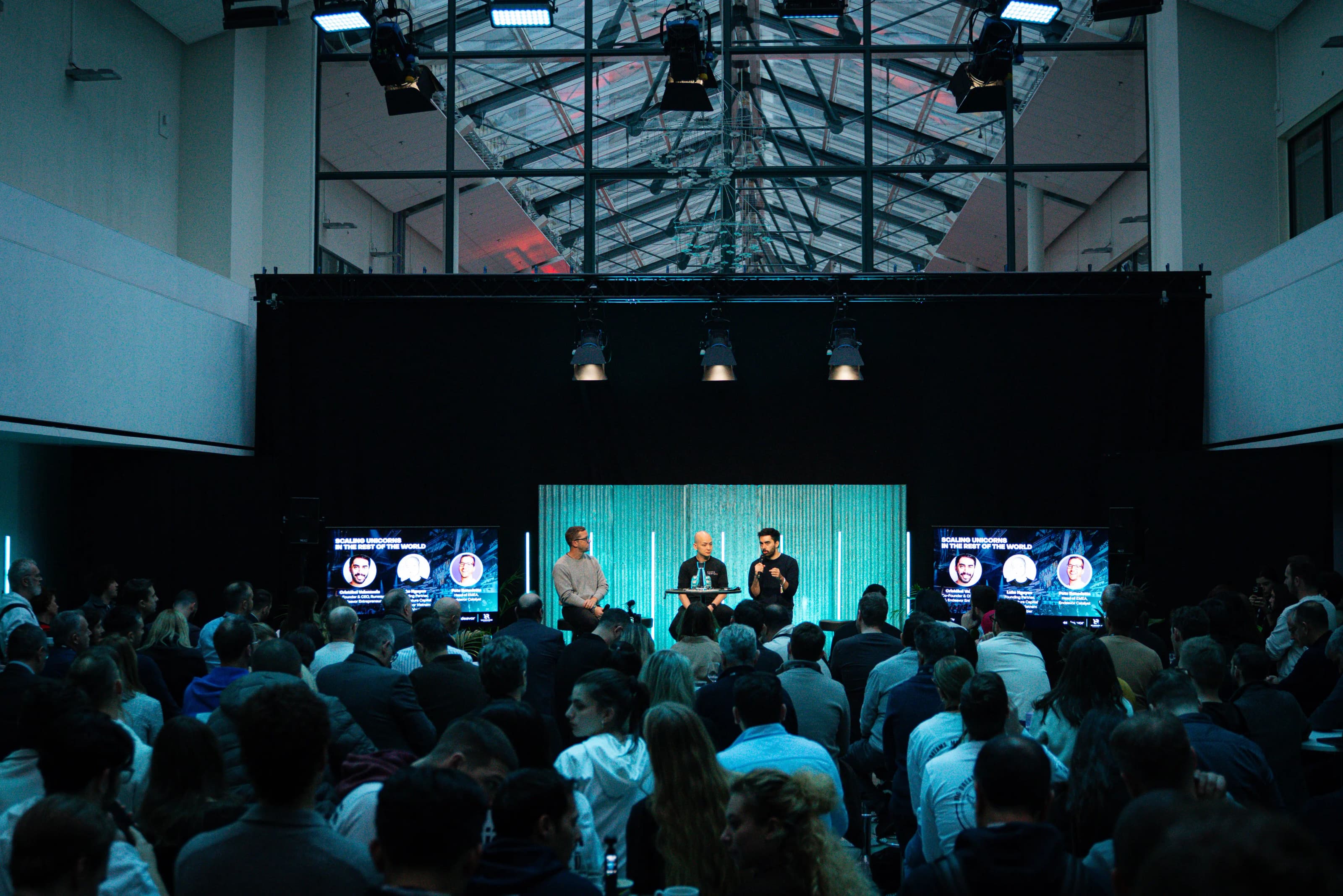
SLUSH Endeavor Side Event: A VC and Founder on the Frontlines of AI on Innovating Amid Warp Speed Change
Endeavor Entrepreneur and Runway CEO and co-founder Cristóbal Valenzuela has spent the last eight years building his company into a $5 billion AI juggernaut. “We train and build the best video and media models. We're working with almost everyone in Hollywood. We work with agencies, brands, gaming studios, with architects. Basically anyone who wants to make any pixel on a screen will be using Runway at some point,” he explained during a recent panel discussion. The event was part of a side hosted by Endeavor inside the Slush venue and was designed to spotlight what it takes to build global companies outside traditional tech hubs. Despite Runway’s impressive global impact, Cristóbal admitted even he struggles to keep pace with the speed of AI evolution.“Years in AI are measured like decades these days and it's hard to keep track of,” he noted.
But he and his fellow panelist, serial entrepreneur, founding Partner of Earth Venture Capital, and Endeavor Vietnam Board Member Luke Nguyen, as well as moderator Pete Benedetto, Head of EMEA at Endeavor Catalyst, offered advice on how think about and build with a technology that is evolving at warp speed.
Focus on what won’t change
Way back in at the turn of the millenium, the world was being rapidly remade by another technology - the internet. Amazon founder Jeff Bezos rode that wave to massive impact and personal wealth. Was he thinking about all the ways the internet would change people’s lives? Sure, but he was even more focused on what wouldn’t change.
“I very frequently get the question: ‘What’s going to change in the next 10 years?’ And that is a very interesting question; it’s a very common one,” he once told a conference. “I almost never get the question: ‘What’s not going to change in the next 10 years?’ And I submit to you that that second question is actually the more important of the two - because you can build a business strategy around the things that are stable in time.” A focus on what would remain true over the long term worked for Bezos. Cristóbal insists it is just as valuable for companies and entrepreneurs thinking through AI disruption today.
“There's enough things happening every single month or week or day in AI that can be very noisy. Being able to filter the noise and have consistent focus is perhaps the most important thing because it will continue to change rapidly,” he told the audience.
You probably can’t predict the particulars of how AI will evolve. Neither Cristóbal nor his customers could. “When I started Runway people thought we were insane because the images that the models could do were so primitive and so small and so early that it wasn't clear enough that they will get to the point where you can now do hyper-realistic, two-hour long 4K video. Look, everything will change,” he said.
But you can and should place bets on the truths or trends you think will hold steady over time. “Make sure you keep maybe a long-term focus on something you believe is going to be true and the rest it's just going to be noise over time,” Cristóbal concluded.
Reduce the cost of mistakes
Luke also encouraged founders to ‘zoom out’ and consider the broader arc of technological change. One of his bigger successes so far has been with his mobile gaming company Athina Studio. During the panel, he explained why he got into the gaming industry:
“Back in the day I found that games were a place where you have a very high tolerance for technology. For any new technology in the last 50 years, the first place people apply the new technologies is a game. The first product people used with the computer? They made games. Then what is the first thing people did with the mobile phone? Games.”
Niches like gaming are “frontier industries” for new technologies because the cost of failure there is relatively low. “With new technology, they never try to apply to FinTech first, which is too crucial,” Luke observed.
Finding ways to apply new technologies in contexts where a failed experiment isn’t a disaster can speed innovation. So can using AI itself to accelerate experimentation.
“AI is a great shortcut for people from anywhere to grab the knowledge and to build a product with a lower cost of failure,” Luke added. “It reduces the cost of learning and that enables people from anywhere to create products, create startups.”
Don’t forget AI literacy
Entrepreneurs are often naturally enthusiastic about new technology. Sometimes they forget that not everyone is as knowledgeable about or open to the latest breakthroughs.
“We had to teach people how to send emails. There were national campaigns around how to understand what an email was. That sounds insane now, but that was the case,” Cristóbal reminded the audience. “I think we're in that same era of AI in some industries where I have to teach you not just what the models can do, but just how they work.”
Luke stressed the importance of taking the time to nurture AI literacy with employees as well as customers.
“At the beginning I got a lot of pushback from the video team using Runway,” he reported of his experience at Athina Studio. Employees feared the AI would replace them, “but it turned out after a few times they tried it, they used it, and they figured out that it's not a human replacement. It's a human amplifier. When they figured that out, I don't have to force anymore. I cannot stop them from using it.”
“People are the things that matter.”
AI is creating enormous opportunities for entrepreneurs and builders. It is also creating enormous uncertainties and anxieties. To stay balanced and build amid such rapid change founders need to keep their eye on fundamental truths. The most fundamental of all, the panel agreed, is our shared humanity.
“Maybe we can kind of forget this over time, but there's one thing that makes a company, which is just people. If you want to make anything really interesting and different and innovative and you want to have any impact, just focus on how people work,” Cristóbal summed up. “AI for me, it's the most powerful thing that we might have ever built, but it's still a technology, it's still something we have made. People are the things that matter.”
If entrepreneurs can adopt the long view, tune out day-to-day noise, and keep their focus on creating positive impact for people, the panelists agreed, they’ll be far better placed to navigate the fast-changing AI space.
People Involved :

Cristóbal Valenzuela

Luke Nguyen

Pete Benedetto