EVENT
Slush 2025 | How the Greek Ecosystem Showed Up on One of the World’s Biggest Startup Stages
How the Greek Ecosystem Showed Up on One of the World’s Biggest Startup Stages
Some trips change your itinerary. Others change what you think is possible. In late 2024, Endeavor Greece brought its first delegation to Helsinki for Slush. For many who made that trip, it was their first time experiencing that concentration of ambition in one place, the density of capital, the quality of conversation, the quiet assumption that building something global was not the exception but the expectation. They came back with a question: why couldn't Greece have something like this? A few months later, Panathēnea was born.
That first trip planted a seed. The second one showed how far it had grown.
In 2025, the Greek delegation returned to Helsinki, larger, more coordinated, and more intentional than ever before. More than 145 people made the journey together, placing Greece among the five largest national delegations at Slush and signaling something that would have been difficult to imagine just a year earlier: that the Greek innovation ecosystem was arriving on one of the world's biggest startup stages not as a collection of individuals, but as one community.

The delegation was supported by partners across the public and private sectors, including National Bank of Greece, HDBI, and institutional representatives from the Greek government, reinforcing the idea that the country’s innovation ecosystem is increasingly moving forward as a coordinated community rather than as isolated actors.
From artificial intelligence and deep tech to cybersecurity and robotics, the mission sought to demonstrate that Greek founders are not only participating in global technology conversations - they are helping shape them.
A Delegation That Showed Up as One Community
The journey to Slush began even before the conference itself. The Greek delegation traveled together to Helsinki on a charter flight powered by AEGEAN Airlines, a symbolic moment that reflected the collective spirit behind the initiative.
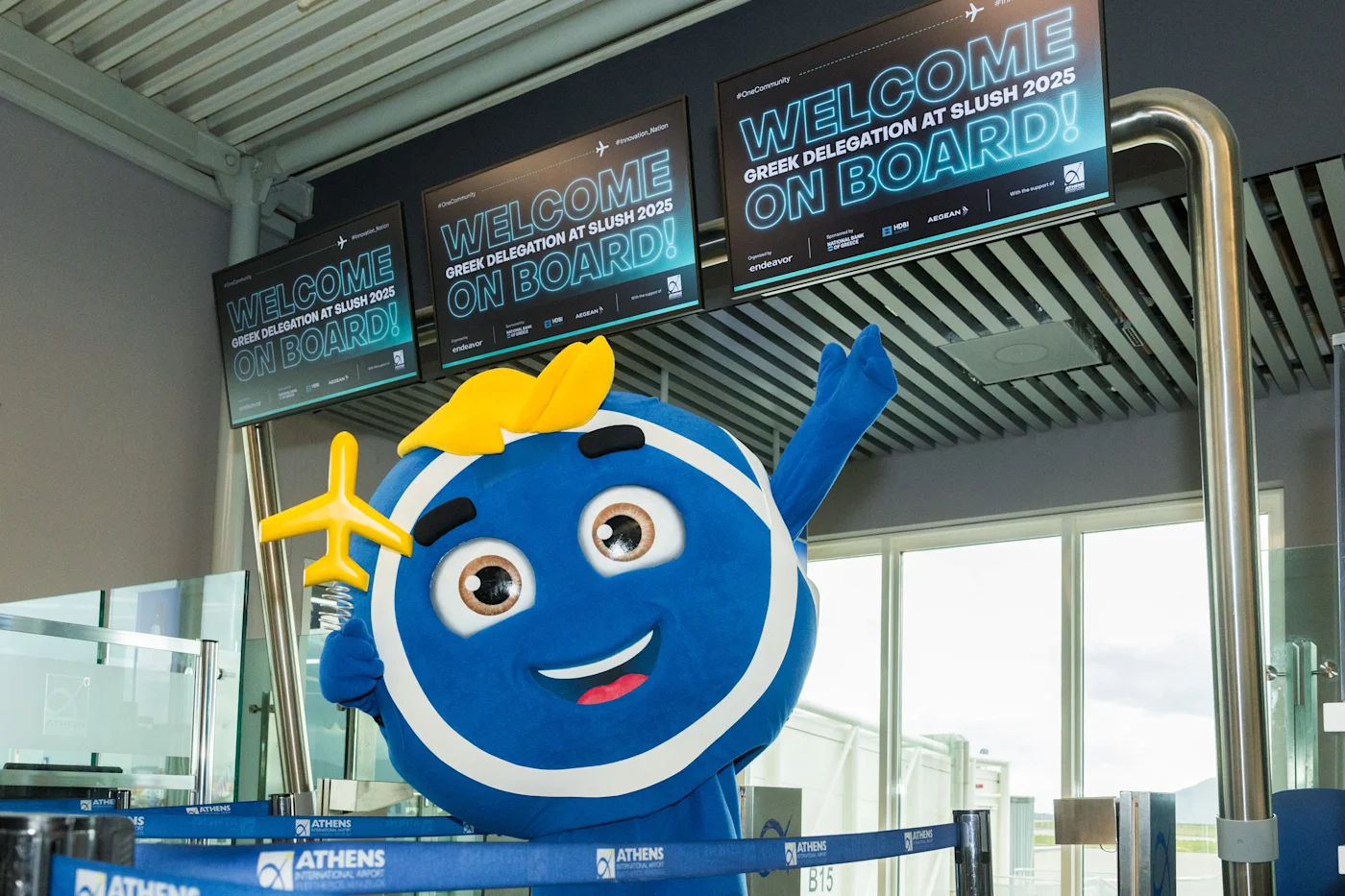
Upon arrival, the delegation was welcomed with a reception hosted by Athens International Airport, marking the start of a week designed not only around the Slush participation but around building bridges between ecosystems.
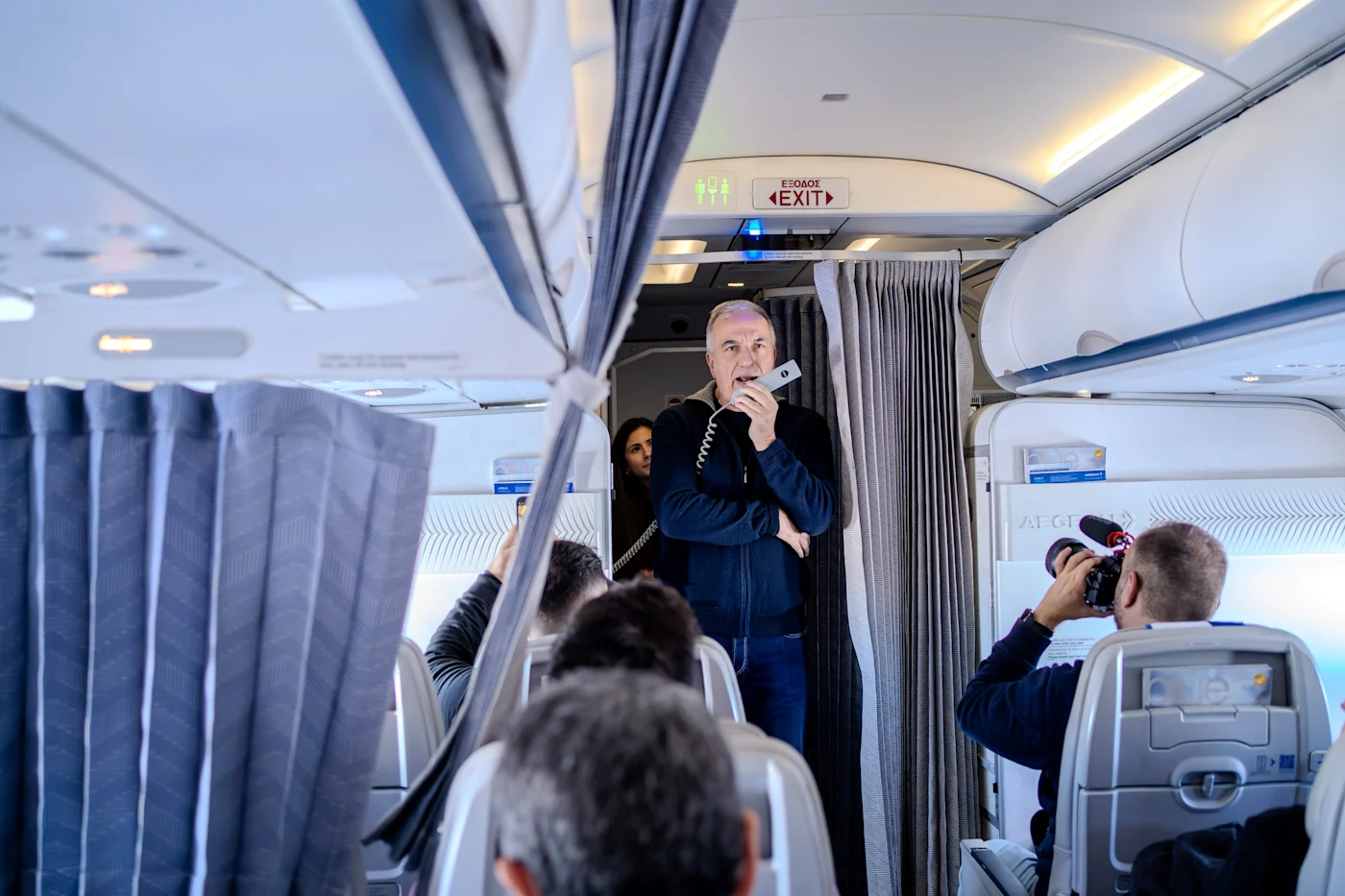
The group represented one of the most coordinated international presences Greece has ever brought to a global technology event. Throughout the week, the delegation operated under a shared identity - #OneCommunity - reflecting a belief that the strength of the ecosystem lies not only in individual success stories but in the collective progress of founders, institutions, investors, and partners working together.
The Endeavor Booth: A Living Hub at the Center of Slush
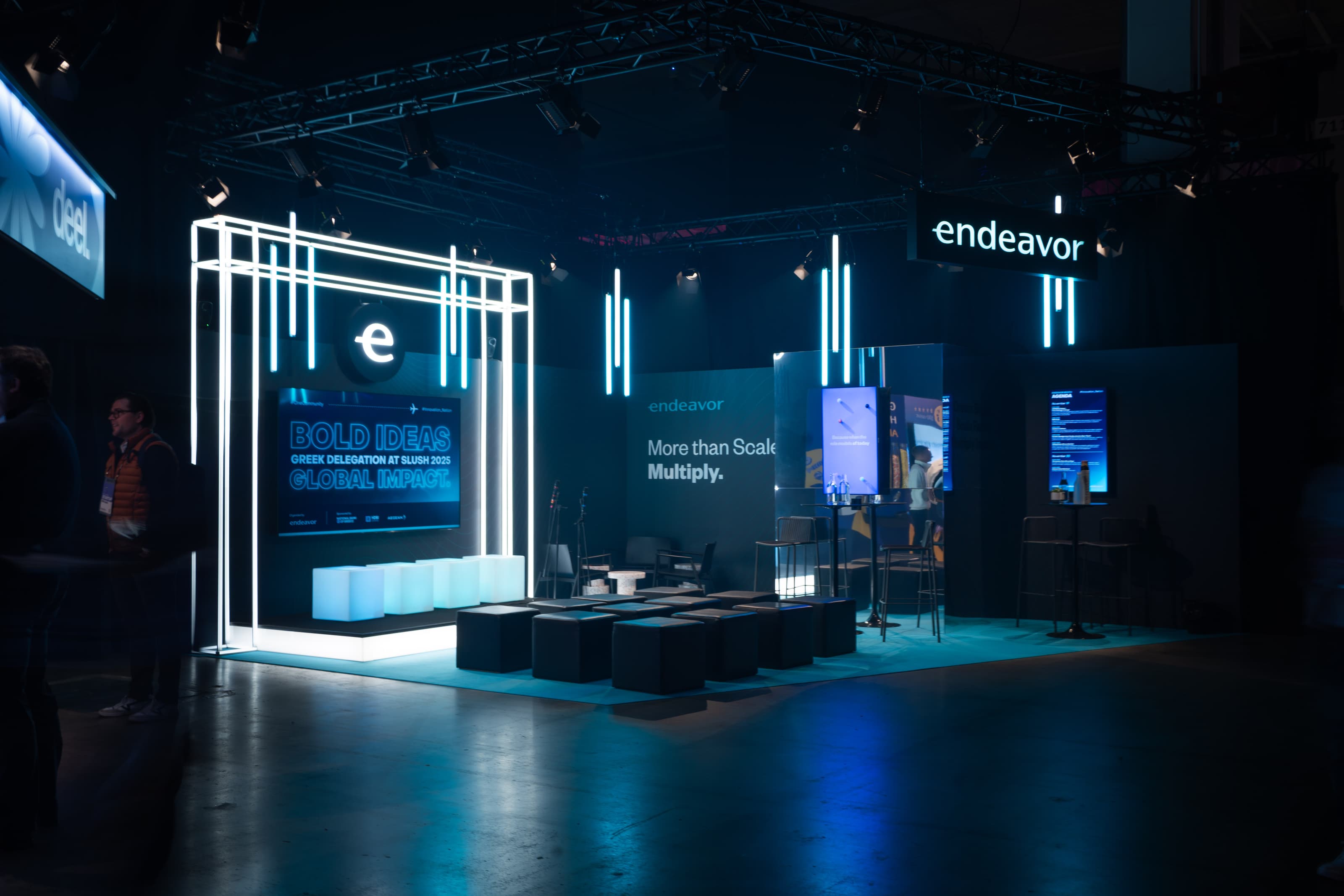
At the heart of the Greek presence at Slush stood the Endeavor Booth, which quickly became one of the most active and vibrant gathering points inside the conference venue.
For two full days, the booth operated as a living hub of the Greek delegation. It was not simply an exhibition stand but a space where conversations, meetings, and collaborations unfolded continuously. Founders met investors, corporates connected with startups, and ecosystem leaders gathered around a shared stage that combined live discussions, media interviews, and spontaneous exchanges.
The program opened with a session led by COSMOTE TELEKOM, an Endeavor Greece’s Institutional Ambassador, setting the tone for the day by focusing on how large technology organizations collaborate with startups to accelerate innovation.
Representing the OTE Group Innovation Scouting team, Mihalis Kefalogiannis and George Onopas shared how COSMOTE engages with emerging technologies through its innovation scouting initiatives. Their discussion explored how telecom operators are increasingly looking beyond traditional R&D, working directly with startups and scale-ups to identify solutions that can address real operational challenges.
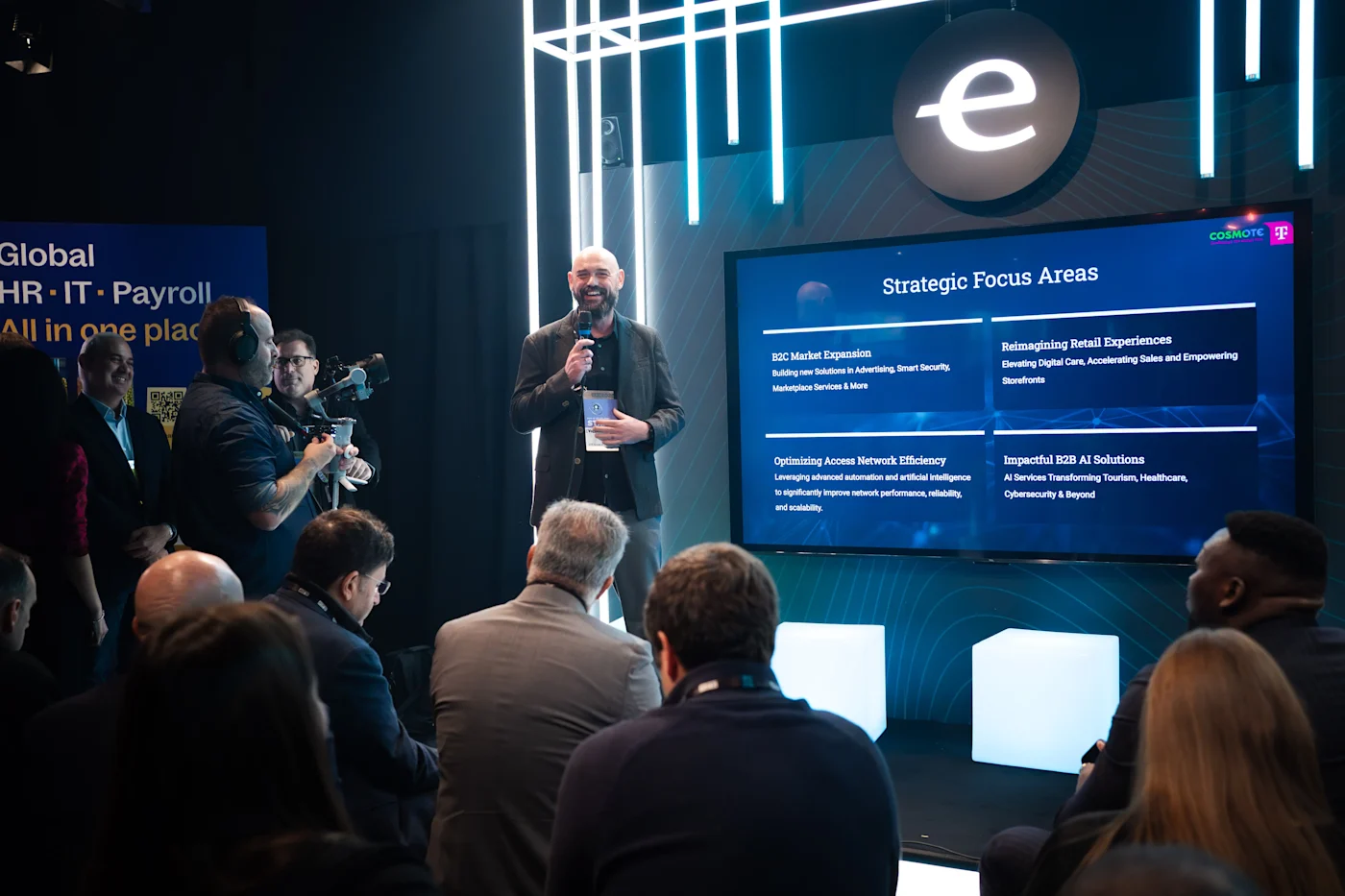
The session also featured selected startup pitches, creating an opportunity for founders to present their technologies and explore potential collaborations with one of the region’s leading telecommunications groups. The exchange reflected COSMOTE’s broader approach to innovation - staying closely connected to global startup ecosystems and identifying technologies capable of scaling into real-world deployment.
The conversation continued with Spiros Arsenis, Vice Director of the Group Business Strategy Sector at the National Bank of Greece, Endeavor Greece’s Board Member, who presented the work of NBG Seeds, the innovation and investment arm of the bank.
Spiros Arsenis offered an inside look into how fintech and technology startups are funded, piloted, and scaled through collaboration with a systemic financial institution. His discussion highlighted how corporate innovation programs can move beyond theoretical partnerships by creating real pathways for startups to test their solutions within large organizations and reach the market faster.
Later in the day, the focus shifted toward the intersection of telecommunications infrastructure, cybersecurity, and defense innovation. Pavlos Skoupras, EU Programs Development Specialist at Vodafone Greece, discussed how secure networks and digital capabilities are becoming foundational for the next generation of dual-use technologies.
His session explored how telecom operators collaborate with startups developing solutions in areas such as AI, cybersecurity, and defense technology - opening pathways for innovation programs to evolve into real operational deployments.
As the afternoon progressed, the spotlight turned toward founders building globally competitive technologies.
Adrian Johnston, Founder of Elyos AI, an Endeavor Scale Up Company, shared his perspective on building autonomous systems designed to operate in complex, real-world environments. Elyos develops AI-powered technologies that enable machines to perceive, decide, and act independently, particularly in high-stakes settings where reliability and precision are critical. His conversation offered insight into what it means to build deep-tech innovation outside traditional technology hubs while still competing at a global level.
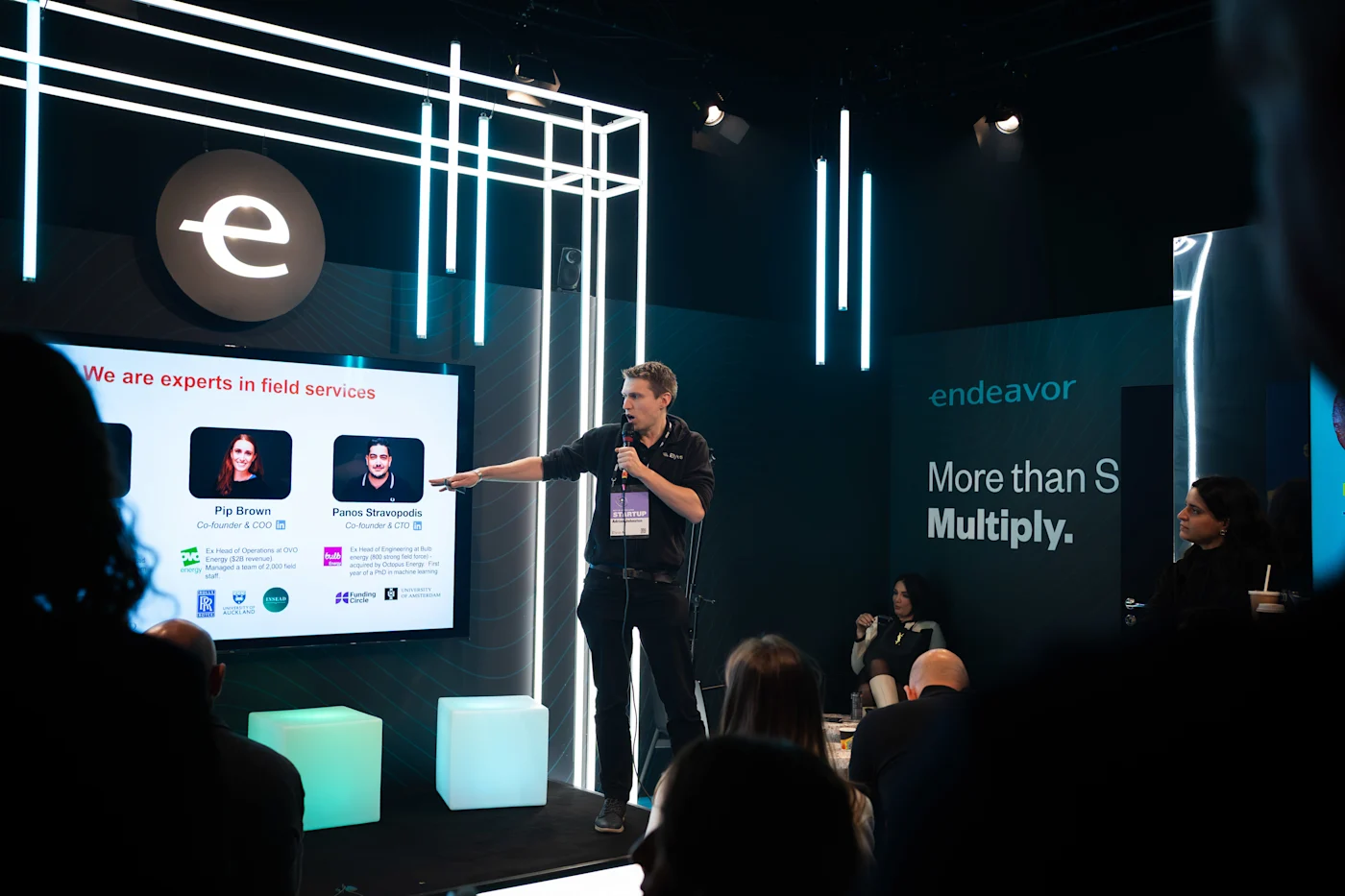
The discussion continued with Georgios Tzafis, Chief Commercial Officer at Acumino, an Endeavor Scale Up Company, who presented the company’s work developing AI-powered “robot coworkers” designed to perform highly dexterous tasks in industrial environments. Powered by its General Robotic Intelligence, Acumino’s systems combine precision, scalability, and real-world adaptability - addressing global labor shortages while improving production efficiency and reducing costs. His remarks highlighted how robotics and applied AI are rapidly transitioning from research to deployment in real operational settings.
Cybersecurity also took center stage with Nikos Fountas (COO) and Gerasimos Marketos (CPO) of Hack The Box, an Endeavor Entrepreneur Company, who shared how the company evolved from a niche community into a global cyber readiness platform. Trusted by enterprises, governments, and security teams, Hack The Box enables organizations to train and test both human talent and AI systems through real-world simulations - strengthening cyber resilience at scale.
Their discussion illustrated how a company originating from the Greek ecosystem was able to build a product with international reach by cultivating a global community of cybersecurity talent.
The day concluded with a series of rapid-fire discussions hosted by Georgia A. Prassinos, Corporate Affairs Director at the Hellenic Centre for Defence Innovation (HCDI), focusing on the emerging landscape of dual-use technologies, with Georgios Tzafis, Nikos Fountas, Alexandros Ioakeimidis, Angelos Tserlekas Zafeirakis. As a central node of Greece’s defence innovation ecosystem, HCDI is bridging startups, industry, and government to accelerate technologies that operate across both civilian and defence sectors - shaping how innovation is deployed in high-stakes, real-world environments.
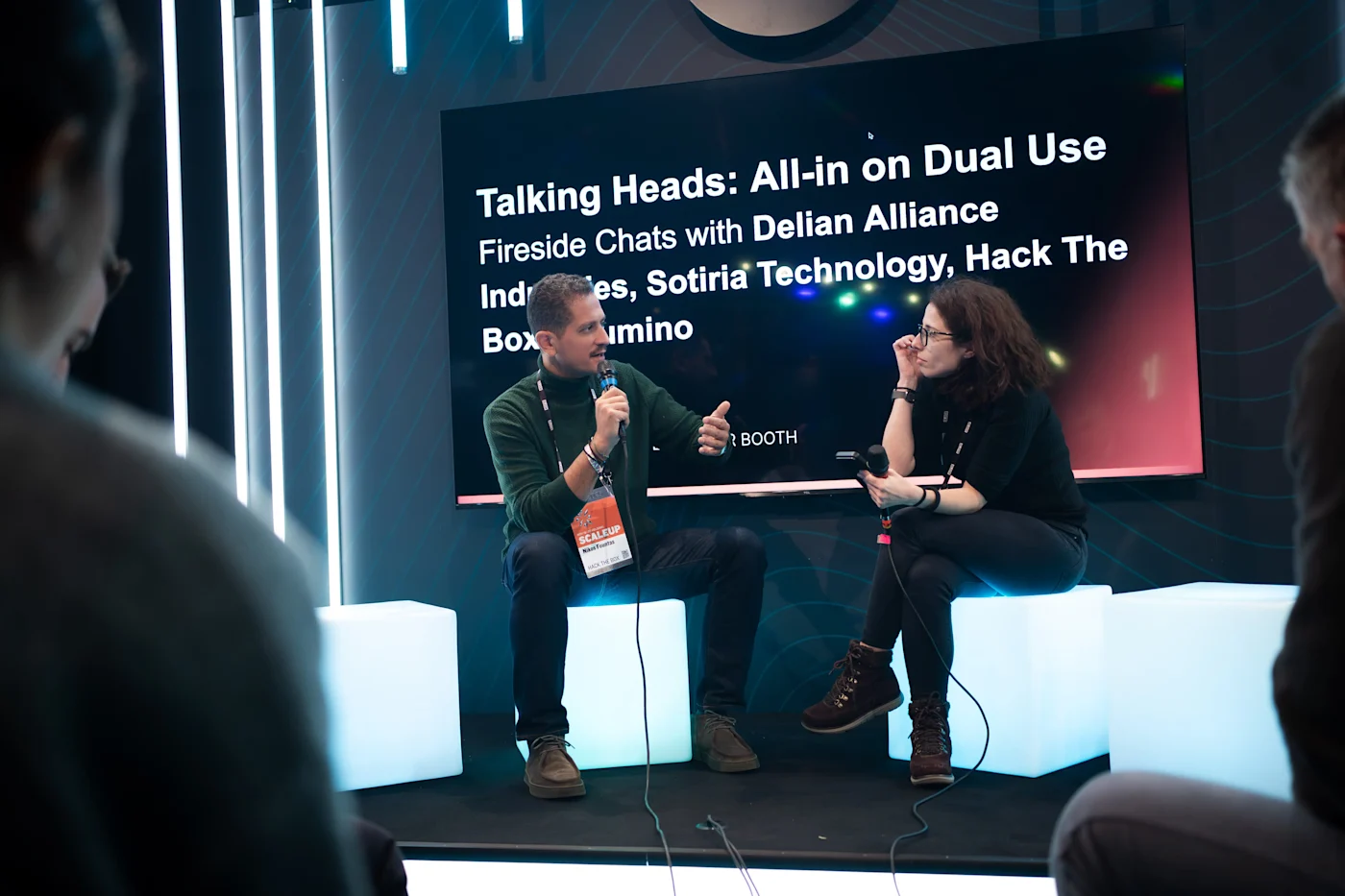
Among the conversations was a discussion with Alexandros Ioakeimidis, Head of Business Development at Delian Alliance Industries, an Endeavor Scale Up Company, who spoke about building autonomous sensing systems for defence and security applications. Delian develops technologies that enhance situational awareness through real-time data and intelligent systems, operating in complex, high-stakes environments where reliability and speed are critical.
Another conversation featured Angelos Tsereklas Zafeirakis, Managing Director of SOTIRIA Technology, who discussed the challenges of deploying dual-use systems across civilian and defence environments. His remarks focused on balancing regulatory requirements with real-world performance, in contexts where reliability and operational readiness are essential.
Turning the Stage Toward Venture Capital
By the second day, the pace of activity at the booth had intensified. Meetings were taking place continuously, founders were introducing investors to one another, and new conversations were forming organically across the space.
One of the central moments of the day was a session titled “The Investor Pitch.” In a reversal of the traditional startup format, the stage was handed over to venture capitalists who presented their investment theses directly to founders.
Maria Dramalioti-Taylor, Managing Partner at Beacon VC, discussed how venture firms support founders beyond capital, emphasizing long-term partnerships as companies scale across markets.
Adding an early-stage perspective, Yiannis Eftychiou, Co-Founder & Partner at 33East, spoke about how investors identify founder potential from the earliest stages, and how long-term value is built through conviction, alignment, and close collaboration before and after the investment.
Fanis Tsarouchis, Senior Principal at Big Pi Ventures, shared insights into investing in deep-tech companies and backing teams building defensible technologies with global ambitions.
From the international venture ecosystem, Hala Fadel, Managing Partner at Eurazeo Growth, reflected on what distinguishes companies capable of navigating the complex transition from early growth to international scale.
Investors from Octopus Ventures, including Luisa Orsini and Constanza Diaz, discussed how they evaluate founders, markets, and technologies when identifying startups capable of expanding across Europe and beyond.
The conversation also included Apostolos Tsatsoulis, Investment Manager at Helidoni Group, who shared how strategic investors think about long-term value creation and how they build partnerships with founders beyond the initial investment.
The stage also welcomed founders discussing their own scaling journeys, offering a firsthand perspective on fundraising and growth.
Konstantinos Kandylas, CEO and Co-Founder of Terra Robotics, shared his experience navigating venture capital while building hardware-driven innovation for global markets. The conversation, joined by Stergios Anastasiadis from Genesis Ventures and Apostolos Tsatsoulis from Helidoni Group, explored the realities of scaling a robotics company from early funding decisions to building technologies capable of competing internationally.
Between sessions, the booth remained in constant motion. Meetings unfolded across tables and corners, founders introduced investors to one another, and conversations continued long after the scheduled programming had ended.
Over the course of the two days, the Endeavor Booth became far more than a conference stage.
It became the heartbeat of the Greek delegation inside Slush - capturing the pace, ambition, and collaborative spirit of an ecosystem increasingly connected to the global innovation landscape.
Beyond the Booth: Endeavor’s Side Events at Slush
Beyond the activity inside the booth, one of the defining elements of the Greek presence this year was the return to Slush with dedicated side events hosted inside the Slush venue itself.
These sessions created a platform for deeper conversations about the technologies and industries reshaping the global economy.
One of the most prominent discussions focused on the rapidly evolving world of artificial intelligence. The conversation brought together Cristóbal Valenzuela, CEO and co-founder of Runway & Endeavor Entrepreneur, alongside venture investor Luke Nguyen, Endeavor Vietname’s Board of Directors, with moderation by Pete Benedetto from Endeavor Catalyst.
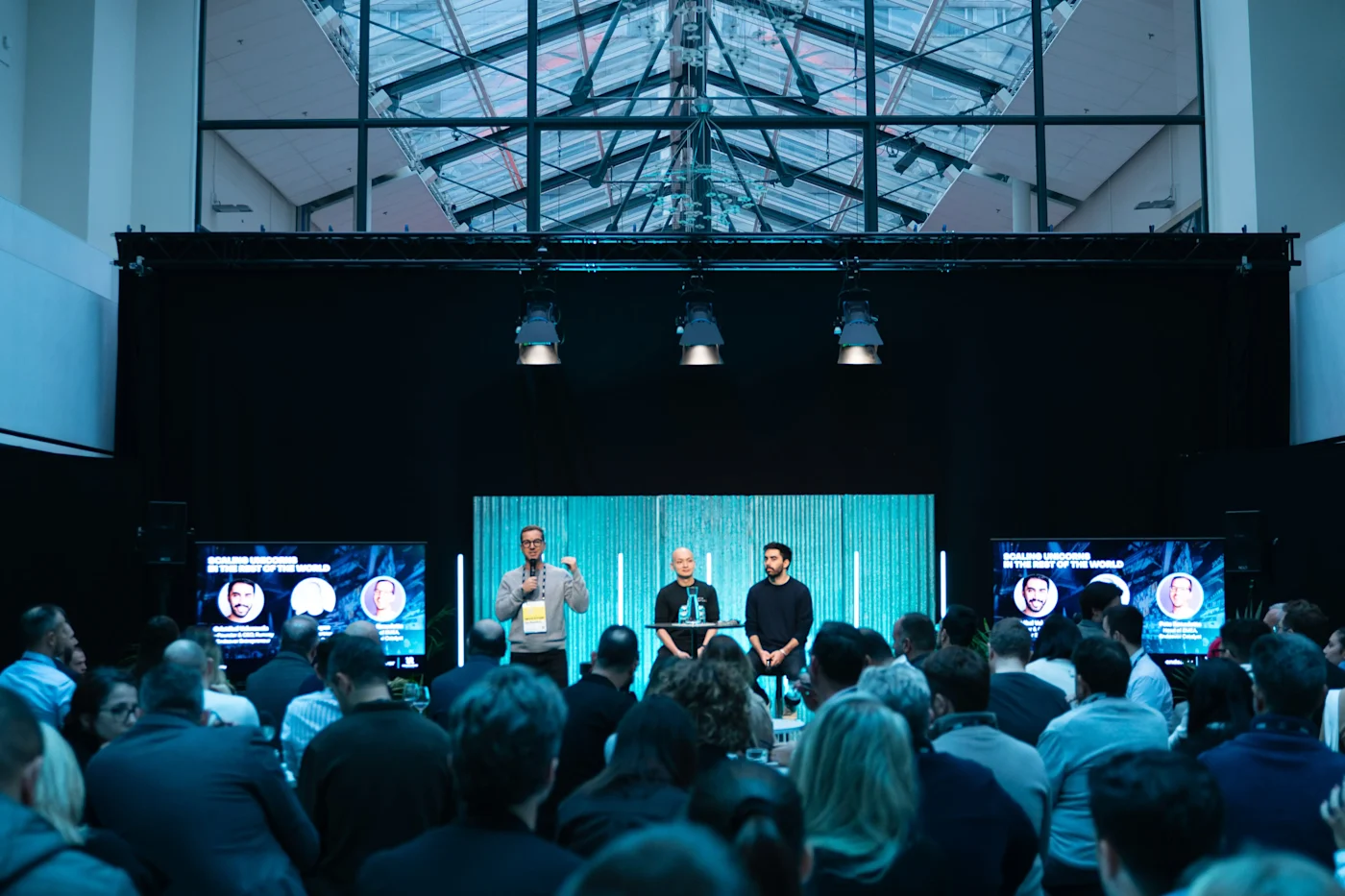
Valenzuela described the extraordinary pace at which artificial intelligence is transforming industries, noting that technological progress in AI now unfolds so rapidly that developments that once took decades can now occur within a few years.
Rather than trying to predict every technological shift, he argued that founders should focus on identifying the fundamental truths that are unlikely to change over time. By building companies around these enduring principles, entrepreneurs can remain focused even as technologies evolve around them.
Nguyen expanded on this perspective by explaining how certain industries act as testing grounds for new technologies. Gaming, he noted, has historically served as an early adoption environment because the cost of experimentation is relatively low. Artificial intelligence, he suggested, is accelerating this process by reducing the cost of learning and enabling entrepreneurs from around the world to build products faster than ever before.
Another major side event focused on the rise of DefenseTech and the growing importance of technological innovation in European security.
The panel brought together Stanislaw Kastory from Expeditions Fund, Artem Moroz from Ukraine’s BRAVE1 defense innovation platform, and Nikolaos Mengos from the Hellenic Centre for Defence Innovation.
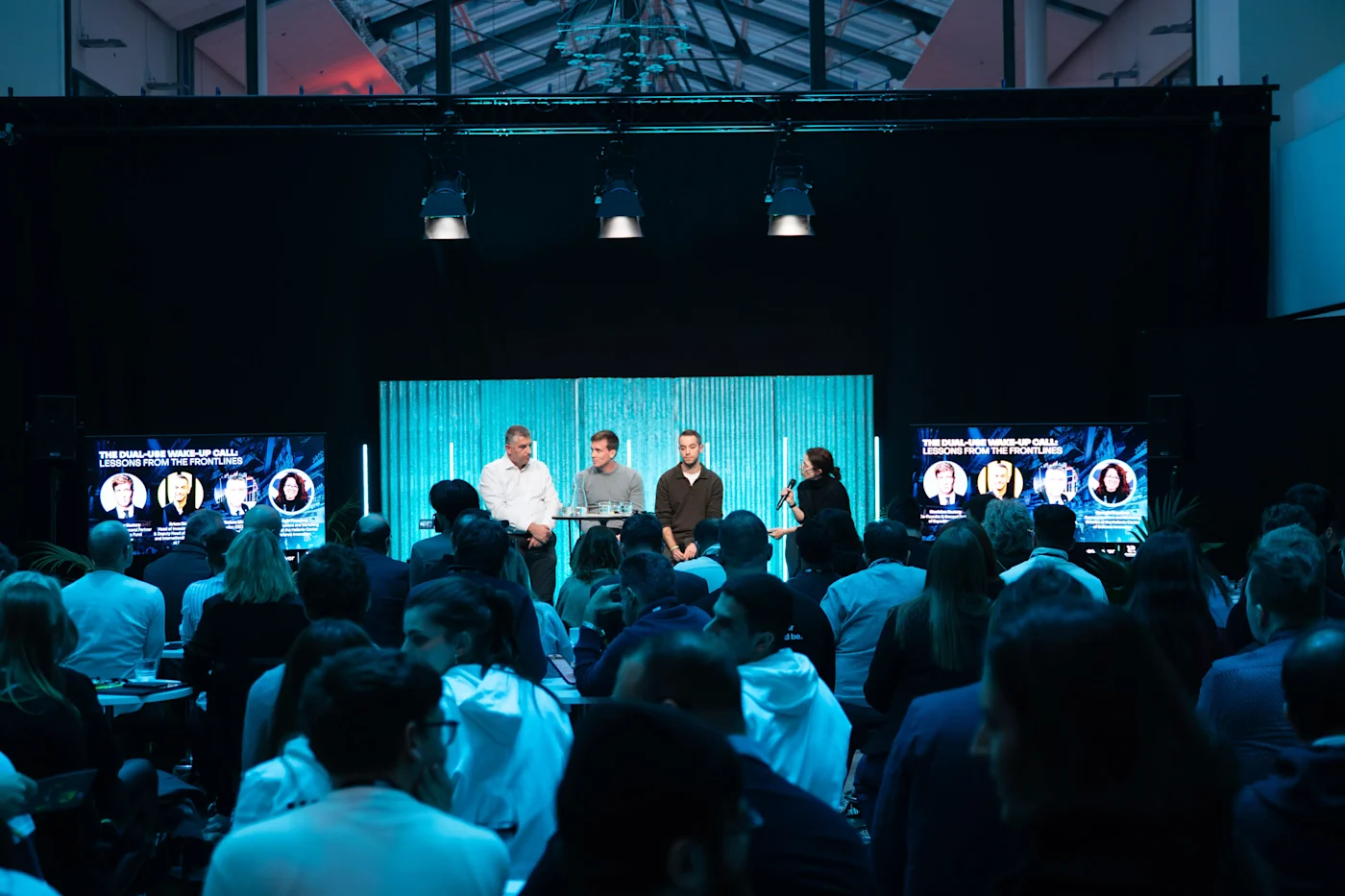
Their discussion highlighted how Europe is increasingly recognizing the need to accelerate technological development in defense while maintaining the safety and reliability required in high-stakes environments.
The panelists emphasized that in a rapidly evolving geopolitical landscape, the ability to experiment, deploy technologies quickly, and learn from real-world feedback is becoming essential.
A third side event shifted the focus toward the broader Central and Eastern European startup ecosystem, through a panel co-hosted with The Recursive, bringing together key voices from across the region.
Moderated by Teodor Antonio Georgiev, the discussion featured Konstantin Bezuhanov (Evrotrust), Ivan Georgiev (Pontica Solutions), Petr Smid (Rockaway Ventures), and Vladimira Cincurova (European Startup Embassy), exploring why the next wave of globally competitive tech companies is increasingly emerging from Central and Eastern Europe.
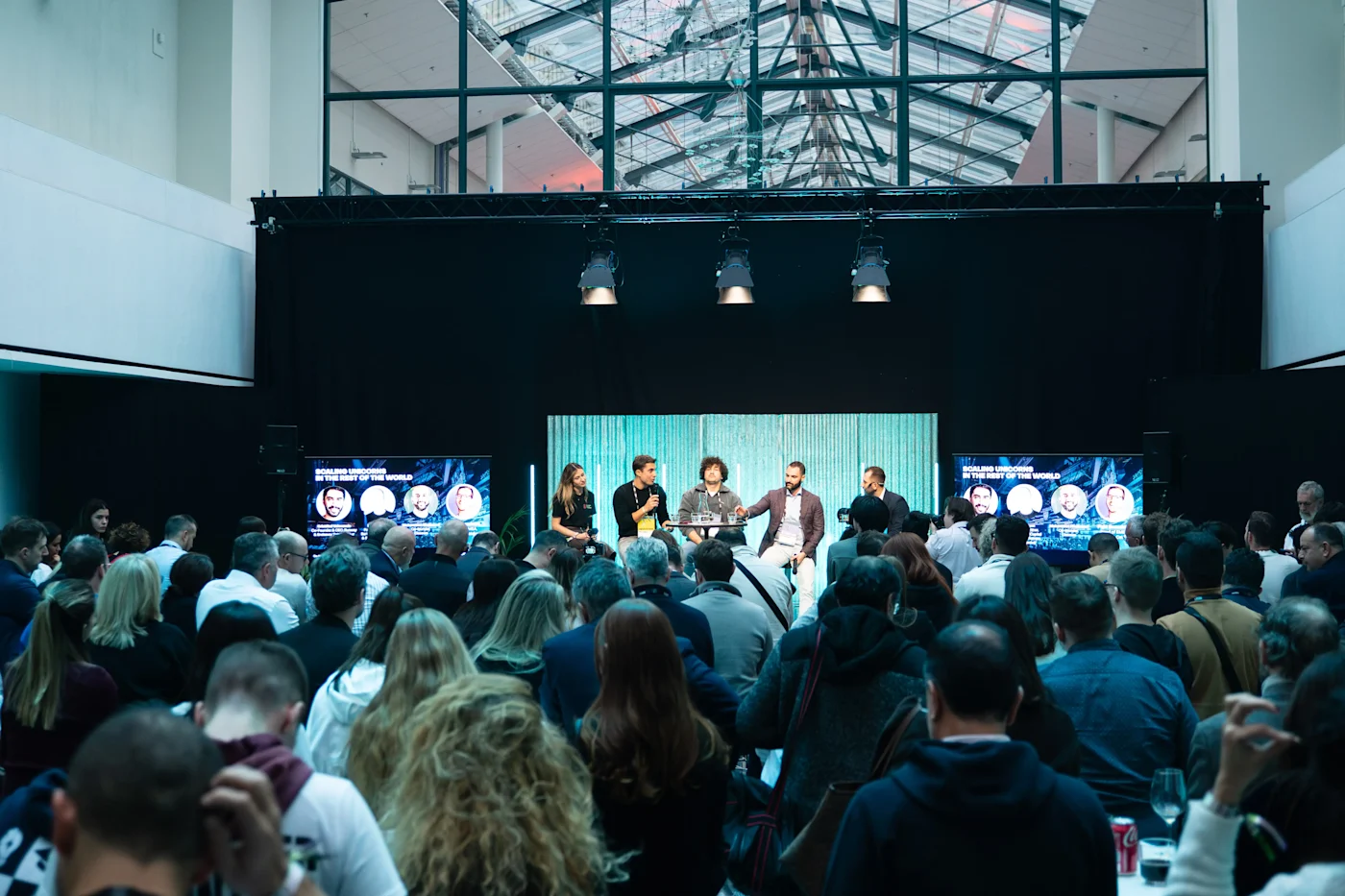
The conversation examined how founders from the region can scale beyond local markets and expand into the U.S., while also addressing the structural challenges that still exist - from access to capital to ecosystem fragmentation. A shared conclusion emerged: while the region possesses immense technical talent, unlocking its full potential will require stronger collaboration, greater ambition, and a mindset geared toward global scale from day one.
A Milestone Moment for Greek Innovation
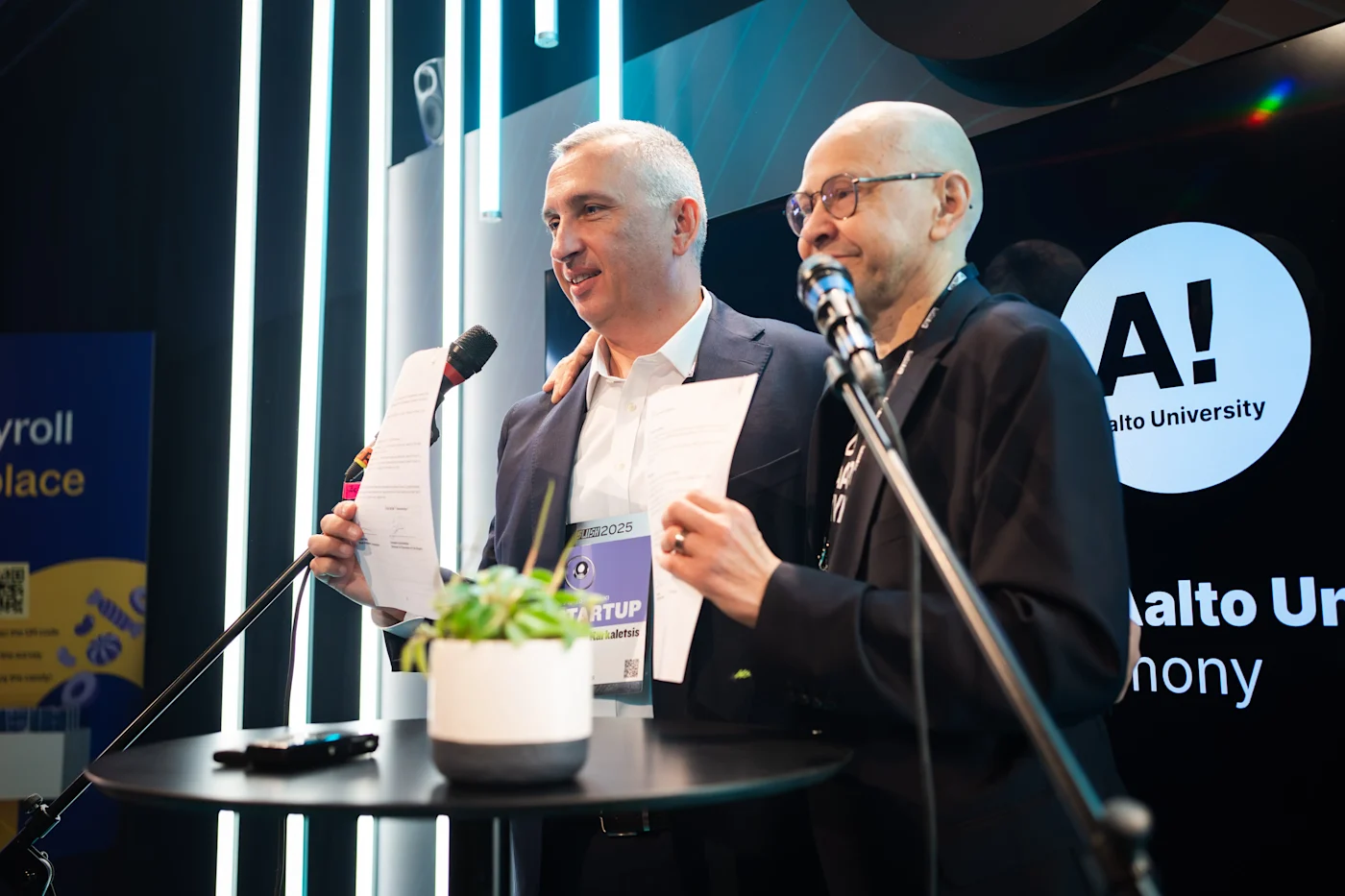
The week concluded with a moment that captured the growing international recognition of the Greek tech ecosystem.
Diffraqtion, founded by Greek entrepreneur Johannes (Giannis) Galatsanos, won the Slush 100 competition, standing out among more than 1,000 global applicants.
The victory represented more than a startup success story. It symbolized the growing ability of Greek deep-tech companies to compete on the world’s largest technology stages.
Powering Greece’s Presence
The scale of the Greek mission at Slush was made possible thanks to the support of partners who helped power the initiative.
A special thank you goes to AEGEAN Airlines, National Bank of Greece and HDBI, whose support enabled one of the most ambitious international ecosystem missions Greece has ever undertaken.
From Presence to Momentum
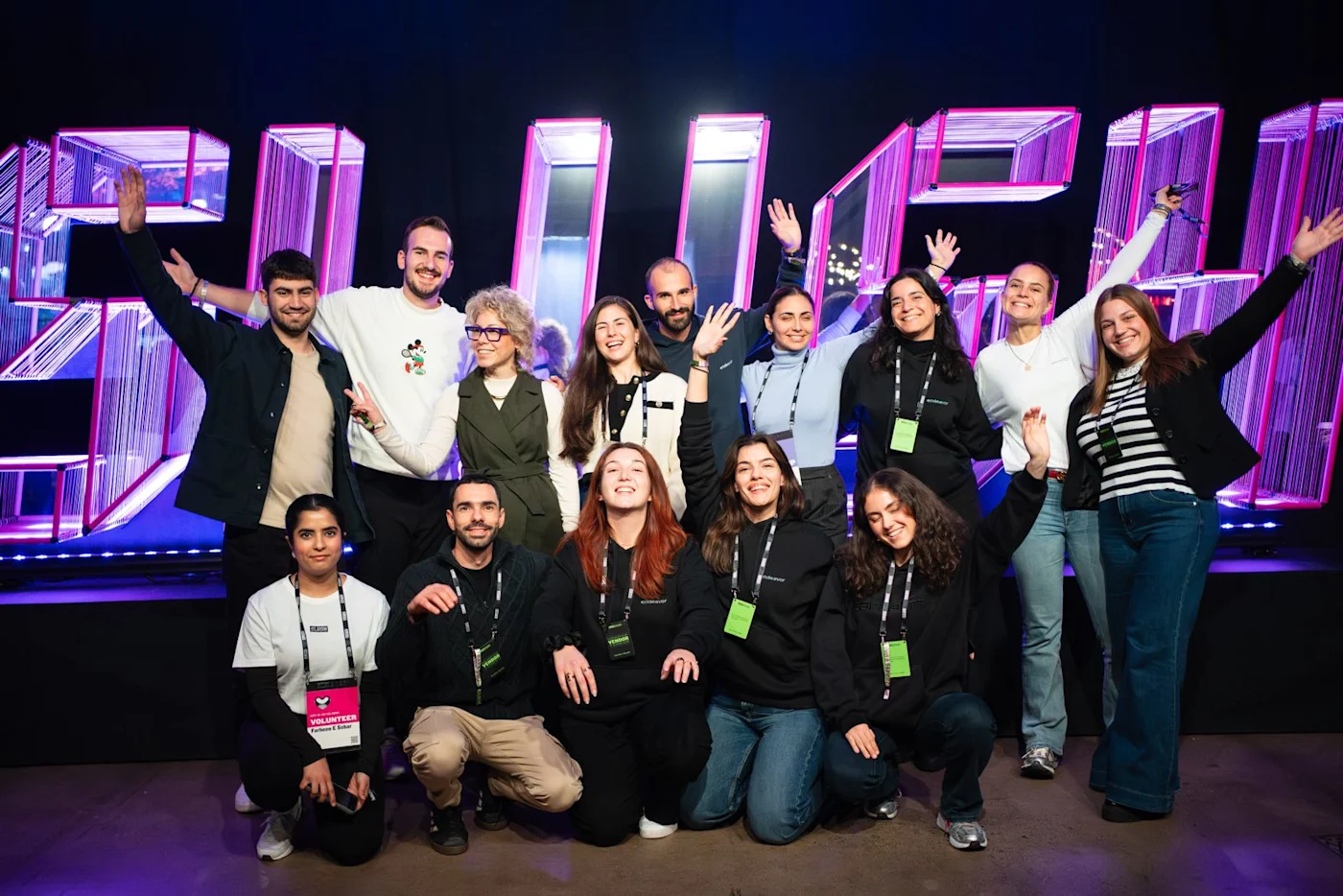
What unfolded in Helsinki was not simply a conference appearance.
It was a demonstration of how far the Greek innovation ecosystem has come and how much potential lies ahead.
Through a strong delegation, a vibrant booth, meaningful side events, and new global connections, the Greek community showed that it is increasingly capable of participating in global technology conversations not only as attendees, but as contributors shaping the future of innovation.
And perhaps most importantly, it did so together - as #OneCommunity.